









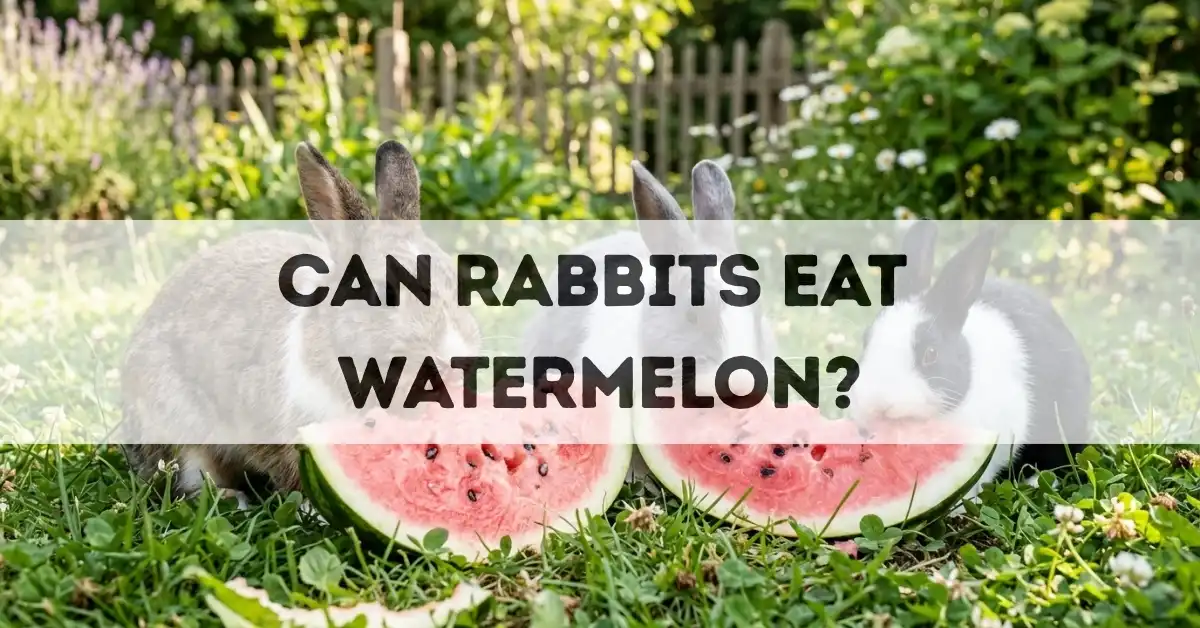
If you cut open a watermelon and your rabbit runs over like it is the best day ever, you are not imagining things. Watermelon smells sweet, it looks fun to nibble, and it is full of juice. So it is normal to ask: can rabbits eat watermelon?
Yes, most healthy adult rabbits can eat a little watermelon, but only as an occasional treat. The safest choice is a tiny piece of seedless watermelon flesh. Too much watermelon can upset a rabbit’s stomach, cause soft poop, or make your rabbit start ignoring healthy foods like hay.
This guide explains exactly how to feed watermelon the safe way, including how much to give, how often, which parts are safe, and what to do if your rabbit eats too much.
Quick Safety
- Is watermelon safe for rabbits? Yes, in small amounts
- Best part to feed: The red or pink flesh
- Avoid: Seeds, juice, big portions, daily feeding
- Typical serving for an adult rabbit: 1 to 2 teaspoons of small cubes
- How often: About once a week, sometimes twice a week at most
- Watch for: Soft stool, messy bottom, less hay eating, fewer poops
If you remember one idea, remember this: watermelon is a dessert, not a meal.
Can Rabbits Eat Watermelon?
Yes, rabbits can eat watermelon, but only in tiny amounts and not every day.
Watermelon is not poisonous to rabbits. The main problem is not “toxic,” the main problem is too much sugar and too much water for a rabbit’s sensitive belly.
A rabbit’s body is built for foods that are:
- High in fiber (especially hay)
- Low in sugar
- Steady and simple
Watermelon is the opposite of hay. It is:
- Very watery
- Sweet
- Low in fiber
So the safe plan is easy: keep watermelon as a rare treat, like a bite-sized dessert.
Bottom line: If your rabbit is healthy and eating hay well, a tiny piece of watermelon once in a while is usually fine.
Why Rabbits Need a High-Fiber Diet (and Where Watermelon Fits)
To feed treats safely, it helps to understand how a rabbit’s digestion works in a simple way.
Rabbits are “hay animals”
A rabbit’s stomach and intestines are made to process lots of rough, fibrous plants all day long. That is why most rabbit experts say the base of an adult rabbit diet should be:
- Unlimited grass hay (timothy, orchard, meadow, and similar hays)
- Leafy greens every day (a mix is best)
- Pellets in a measured amount (not a free-feed bowl)
- Fresh water all the time
- Treats (like fruit) only sometimes
Why fiber is so important
Fiber helps:
- Keep food moving through the gut at the right speed
- Support healthy gut bacteria
- Help rabbits make normal poop
- Wear down teeth, because rabbit teeth keep growing
Why sugar can be a problem
Sugar can:
- Upset the balance of gut bacteria
- Cause soft poop or extra messy droppings
- Make a rabbit want sweet foods instead of healthy hay
So watermelon can fit into a rabbit’s life, but it should sit at the very top of the food pyramid as a tiny treat.
Simple takeaway: If your rabbit is not eating hay well, fix the hay habit first. Treats come last.
What Parts of Watermelon Can Rabbits Eat? Flesh, Rind, Seeds, and Skin
When people ask “can rabbits eat watermelon,” they often mean the red fruit part. But watermelon has different parts, and they are not all equal.
Can rabbits eat watermelon flesh?
Yes. The red or pink flesh is the safest part to offer.
Even so, it should be:
- A very small portion
- Given only sometimes
- Seedless, or with seeds removed
Best choice: a small cube of seedless watermelon flesh.
Can rabbits have watermelon rind?
This depends on what you mean by “rind.”
Watermelon rind includes:
- The pale inner rind (the light part near the fruit)
- The dark green outer skin (the hard outside)
The pale inner rind
Sometimes okay in a tiny amount, but not the best choice.
It is:
- Less sweet than the flesh
- Tougher than the flesh
- Higher risk for stomach upset than the flesh
If you offer inner rind:
- Offer a very small piece
- Wash it very well
- Watch your rabbit’s poop for the next day
The dark green outer skin
Skip it. It is very tough and not worth the risk.
Simple takeaway: If you want the safest option, feed only the flesh and skip the rind.
Can rabbits eat watermelon seeds?
It is best to avoid seeds.
Seeds are not a healthy rabbit food, and they can cause problems:
- Choking risk: rabbits can grab and swallow quickly
- Hard texture: not made for rabbit chewing
- Fat content: seeds are fatty compared to a rabbit’s normal diet
Even if a rabbit swallows one small seed by accident, do not panic. But as a feeding choice, it is better to remove seeds.
Best choice: seedless watermelon, and still check for a few seeds.
Can rabbits eat watermelon skin (the thick dark green peel)?
Better to avoid it. The thick peel is hard, chewy, and more likely to cause tummy trouble.
Is Watermelon Good for Rabbits? Nutrition Explained in Simple Terms
Some people think fruit must be “healthy” because it is natural. Watermelon is healthy for humans in many ways, but rabbits have different needs.
What watermelon has
- A lot of water
- Some vitamins (small amounts)
- A sweet taste rabbits often love
What watermelon does not have much of
- Fiber (the most important nutrient for rabbits)
What watermelon also has (that matters for rabbits)
- Sugar
Even natural sugar can be too much for a rabbit if you feed fruit often. Rabbits do best when their gut gets steady, fibrous food all day.
So is watermelon “good” for rabbits? It can be a fun treat, but it is not needed. Think of it like cake at a birthday party. A little can be fine. A lot is not a good idea.
Takeaway: Watermelon is not a health food for rabbits. It is a small, occasional treat.
How Much Watermelon Can a Rabbit Have? (Serving Size Guide)
Portion size is where many owners accidentally go wrong. A rabbit may beg for more, but begging is not a sign of need. Rabbits often beg for sweet foods because they taste exciting.
General serving guideline (adult rabbits)
A safe, common guideline is:
- 1 to 2 teaspoons total of watermelon flesh per serving
That means:
- One or two very small cubes
- Not a big slice
- Not a handful
Serving size guide by rabbit size
Use this as a simple starting point:
- Small rabbits (under 4 lb / 1.8 kg): about 1 teaspoon
- Medium rabbits (4 to 8 lb / 1.8 to 3.6 kg): about 1 to 2 teaspoons
- Large rabbits (over 8 lb / 3.6 kg): about 2 teaspoons, sometimes a little more if poop stays normal
When in doubt, choose the smaller amount. You can always give another tiny taste next week if your rabbit does well.
For rabbits new to watermelon
Start even smaller:
- A piece the size of your fingernail
Then wait a full day and check:
- Is your rabbit eating hay normally?
- Are poops normal size and normal amount?
- Is the litter box normal?
If all looks normal, you can give a tiny serving again later, not the next day, but later in the week.
Takeaway: A rabbit-safe serving is measured in teaspoons, not slices.
How Often Can Rabbits Eat Watermelon?
Most healthy adult rabbits can have watermelon:
- About once a week
- Twice a week at most, if the portion is tiny and your rabbit has a strong stomach
Some rabbits do better with less, especially rabbits that:
- Get soft poop easily
- Have messy cecotropes
- Gain weight easily
- Act picky about hay
If that sounds like your rabbit, consider watermelon:
- Once every few weeks, or
- Not at all
A rabbit does not need fruit to be happy. Many rabbits prefer routine, comfy spaces, and fun hay options more than extra sweets.
Takeaway: Watermelon is a “sometimes” treat, not a schedule item.
Can Baby Rabbits Eat Watermelon?
For baby rabbits, the safest answer is usually: no, skip watermelon for now.
Baby rabbits have a more sensitive digestive system, and their gut bacteria are still settling into a stable routine. Sugary, watery fruit can make stomach trouble more likely.
A simple and safe approach for young rabbits
If your rabbit is still young:
- Focus on hay and the right pellets for that age
- Follow your vet’s advice on when to start greens
- Wait on fruit until your rabbit is older and stable
Many rabbit owners wait until the rabbit is older and doing well on:
- Lots of hay
- A steady routine
- Normal poop for a long time
If you are unsure, ask a rabbit-savvy vet what age is best for your specific rabbit.
Takeaway: Watermelon is not a good “starter food” for baby rabbits.
Can Rabbits with Health Problems Eat Watermelon?
Some rabbits should have little or no watermelon. If your rabbit has a health issue, you want to be extra careful.
Overweight rabbits
Watermelon has fewer calories than some treats, but it still has sugar. Sugar can lead to:
- More begging for sweets
- Less interest in hay
- Weight problems over time
If your rabbit is overweight, it is often better to skip fruit treats or use extremely tiny portions very rarely.
Rabbits with soft stool or messy cecotropes
Watermelon can make this worse because it is:
- Sweet
- Watery
If your rabbit often has a messy bottom, watermelon is not a great choice.
Rabbits with a history of GI stasis
GI stasis means the gut slows down and can become dangerous. If your rabbit has had GI stasis before, your vet may recommend a strict, steady diet.
Watermelon is not automatically “forbidden,” but it is higher risk for some rabbits. If your rabbit is prone to tummy trouble, ask your vet before adding fruit.
Rabbits with unusual medical needs
If your rabbit has a special condition where sugar needs to be limited, it is best to avoid watermelon unless a rabbit-savvy vet says it is okay.
Important reminder: If your rabbit is not eating, seems in pain, or has fewer poops, do not use watermelon to “tempt” them into eating. That can delay real help.
Takeaway: Health issues change the rules. When in doubt, skip fruit and ask your vet.
How to Prepare Watermelon for Rabbits (Step-by-Step)
Preparation matters because rabbits are small and sensitive. A few simple steps make watermelon safer.
Step 1: Choose fresh watermelon
Use watermelon that is:
- Fresh
- Not slimy
- Not fermented
- Not starting to smell sour
Do not feed watermelon that has been sitting out a long time.
Step 2: Wash the outside
Even if you only feed the flesh, your knife cuts through the outside and can carry germs to the inside.
Wash the rind under running water and rub it clean.
Step 3: Cut a small portion first
Do not cut a big bowl “for later.” It is easier to overfeed that way.
Cut a tiny piece, then put the watermelon away.
Step 4: Remove seeds
Remove:
- Black seeds
- White seeds you can easily see
Seedless watermelon is simpler, but still check.
Step 5: Serve it at room temperature
Very cold fruit can bother some rabbits. Room temperature is a safer choice.
Step 6: Use a clean dish or hand-feed
Hand-feeding helps with portion control. A clean dish is fine too.
Step 7: Remove leftovers quickly
Do not leave watermelon in the enclosure for hours. It can:
- Spoil
- Attract bugs
- Make a sticky mess
Takeaway: Clean, seedless, room temp, and tiny.
How to Introduce Watermelon Safely (First-Timer Plan)
Any new food should be introduced slowly. This matters even more with fruit.
A simple first-timer plan
Day 1: Give a piece the size of your fingernail.
Next 24 hours: Watch for normal behavior:
- Eating hay normally
- Normal poop amount and size
- Normal energy
Later in the week: If everything stays normal, give a slightly bigger piece, still very small.
If you see any problems
If you see:
- Soft poop
- Messy cecotropes
- Less hay eating
- Smaller poops
- A rabbit that seems “off”
Stop watermelon right away and return to basics:
- Unlimited hay
- Water
- Normal greens if your rabbit already eats them well
If appetite drops or poops slow down, call a rabbit-savvy vet.
Takeaway: One tiny test is better than a big first serving.
What Happens if a Rabbit Eats Too Much Watermelon? Signs and What to Do
Sometimes a rabbit steals fruit off a plate, or a well-meaning family member gives too much. Here is what to watch for.
Signs your rabbit ate too much watermelon
- Soft stool (mushy poop)
- Messy bottom (sticky droppings stuck to fur)
- More smelly droppings than usual
- Gas signs: belly discomfort, sitting hunched, not wanting to move
- Less interest in hay
- Fewer poops than normal
- Low energy
Soft stool vs watery diarrhea (important difference)
- Soft stool: mushy poop that still has some shape
- Watery diarrhea: liquid poop, puddles, or very wet mess
Watery diarrhea is more serious, especially for young rabbits. If you see watery diarrhea, contact a rabbit-savvy vet right away.
What to do if symptoms are mild
If your rabbit is still eating and acting mostly normal:
- Stop all treats right away
- Offer unlimited hay
- Make sure fresh water is available
- Keep your rabbit calm, warm, and comfortable
- Watch poop and appetite closely for the next day
When to call a rabbit-savvy vet urgently
Call urgently if:
- Your rabbit stops eating
- Your rabbit refuses hay
- Poops become tiny, very few, or stop
- Your rabbit looks painful (hunched posture, tooth grinding)
- Belly looks bloated
- You see watery diarrhea
Rabbit digestion can get worse fast. Getting help early is safer.
Takeaway: Fewer poops and less eating are big warning signs.
Can Rabbits Eat Watermelon Every Day?
No, daily watermelon is not recommended.
Even a small daily amount can cause problems over time:
- Too much sugar for the gut
- Soft stool that keeps coming back
- A rabbit that starts refusing hay because it wants sweets
- Weight gain in rabbits that gain easily
If you want to give your rabbit something special every day, it is better to stick to the normal healthy diet and use tiny “treat moments” that are not sugary. But for watermelon specifically, the answer stays the same: not every day.
Takeaway: Watermelon is a sometimes treat, not a daily habit.
Frozen Watermelon, Watermelon Juice, and Flavored Treats
These are common questions, especially in summer.
Can rabbits eat frozen watermelon?
Not recommended.
Frozen watermelon is:
- Very cold
- Slippery and hard to chew
- Messy as it melts
Cold foods can upset some rabbits’ stomachs. Fresh and room temperature is safer.
Can rabbits drink watermelon juice?
No. Juice is mostly sugar and water with almost no fiber. It can upset the gut quickly.
Rabbits should drink plain water.
What about watermelon-flavored rabbit treats?
Avoid “watermelon drops,” “fruit candies,” and similar snacks.
They often include:
- Added sugar
- Starches
- Ingredients rabbits do not need
If you want watermelon, offer real watermelon flesh in a tiny amount. Real food is easier to control.
Takeaway: Real watermelon in tiny pieces is safer than juice or processed treats.
Common Watermelon Feeding Mistakes (and Easy Fixes)
Many rabbit tummy problems happen from normal mistakes, not from bad intentions.
Mistake 1: Giving a big slice
A rabbit can eat a surprising amount quickly. A big slice can mean too much sugar and too much water.
Fix: Measure a serving in teaspoons. Cut one or two small cubes.
Mistake 2: Feeding watermelon too often in hot weather
It feels kind to offer juicy fruit when it is hot, but daily fruit can cause soft stool.
Fix: Keep the same treat rules in summer. Offer shade, cool surfaces, and fresh water instead.
Mistake 3: Not removing seeds
Seeds are easy to miss, especially in “seedless” watermelon.
Fix: Check the piece before you give it.
Mistake 4: Leaving watermelon in the cage for hours
It spoils and attracts insects.
Fix: Remove leftovers within 20 to 30 minutes, sooner if the room is warm.
Mistake 5: Offering rind without washing
The outer surface can carry dirt, germs, or chemicals.
Fix: Wash the outside well, and if you want the safest choice, skip rind completely.
Mistake 6: Adding watermelon right after another new food
If your rabbit gets soft stool, you will not know which new food caused it.
Fix: Introduce only one new food at a time, then wait a day to observe.
Takeaway: Small, clean, seedless, and not too often prevents most problems.
FAQ: Can Bunnies Eat Watermelon?
Can bunnies eat watermelon?
Yes. “Bunny” is just another name for rabbit. The same rules apply: tiny amount, occasional treat, and mostly hay diet.
Can rabbits eat seedless watermelon?
Yes. Seedless watermelon flesh is the easiest and safest option. Still keep the portion small.
Can rabbits eat yellow watermelon?
Usually yes, as long as it is plain watermelon with no added ingredients. Yellow watermelon is still sweet, so keep portions tiny.
Can rabbits have watermelon rind if it is organic?
Organic can reduce pesticide concerns, but rind is still tougher and can still cause tummy trouble. If you offer rind, offer only a very small piece of the pale inner rind, and watch your rabbit’s poop.
My rabbit loves watermelon, can I give more if they beg?
Begging does not mean it is healthy. Rabbits often beg for sweet foods because they taste good. Stay firm with portion size and offer hay afterward.
What if my rabbit stole watermelon and ate a lot?
Remove the watermelon, offer unlimited hay and water, and watch closely. Call a rabbit-savvy vet if your rabbit eats less hay, has fewer poops, seems painful, or stops eating.
Is watermelon better than other fruits for rabbits?
Watermelon is not “better,” it is just different. It is very watery and still sugary. Some rabbits get soft stool more easily from watery fruit. The safest plan is small portions and not often.
Can watermelon help if my rabbit does not drink much water?
A tiny piece can add a little fluid, but it should not replace normal drinking. Make sure water is clean and easy to access, and talk to a vet if low drinking seems unusual.
Summary Checklist
The safest way to feed watermelon to rabbits (quick checklist)
- Feed only the red or pink flesh
- Choose seedless, and still remove any seeds you see
- Give 1 to 2 teaspoons total per serving for most adult rabbits
- Limit to once a week, or twice a week at most
- Serve fresh, washed, and room temperature
- Remove leftovers quickly
- Watch poop and appetite for the next 24 hours
Avoid
- Daily watermelon
- Big slices
- Seeds
- Juice
- Frozen watermelon
- Tough dark green peel
- Large amounts of rind
Can Rabbits Eat Watermelon?
Yes, rabbits can eat watermelon, but only as a tiny, occasional treat. The safest choice is a small cube of seedless watermelon flesh, about 1 to 2 teaspoons, given around once a week. Too much watermelon can cause soft stool, messy droppings, gas, or poor eating habits like refusing hay.
If you tell me your rabbit’s age, approximate weight (or small, medium, large), and what they eat in a normal day (hay type, pellets, greens), I can suggest a conservative watermelon serving size and a safe treat schedule that fits your rabbit.