








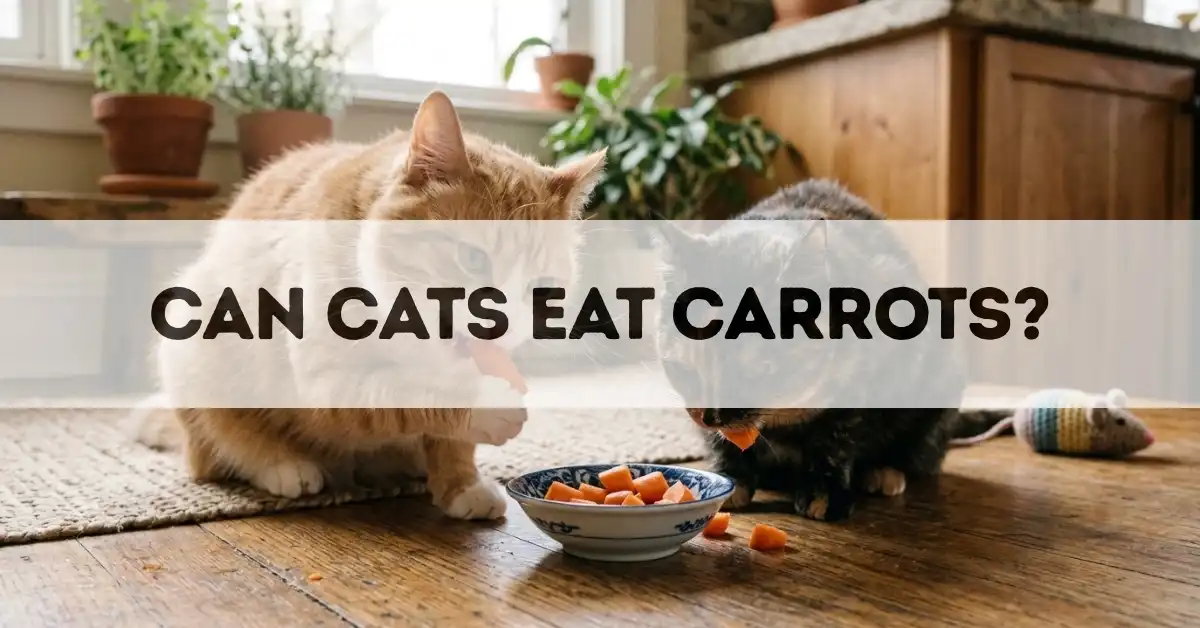
If your cat watches you while you chop carrots, it is normal to wonder, “Can cats eat carrots?” You do not want to share something unsafe, but you also do not want to overthink a tiny bite of food.
Yes, most cats can eat carrots in small amounts. Carrots are not toxic to cats. The key is how you prepare them and how much you give. Carrots should be an occasional treat, not a daily food and not a replacement for real cat food.
This guide explains everything in simple, practical steps. You will learn what is safe, what is risky, how to prepare carrots the right way, and how to decide if carrots are a good idea for your specific cat.
Quick Answer: Can Cats Eat Carrots?
Yes. Plain, cooked carrots are safe for most cats in tiny amounts. Serve them soft and cut into very small pieces, or mash them. Avoid raw chunks, carrot sticks, seasoning, butter, oils, onion, garlic, and salty sauces. Carrots are a treat only. Your cat should still eat a complete and balanced cat food as their main diet.
Are Carrots Safe for Cats?
Carrots are generally safe for cats. They are not considered poisonous, and many cats can eat a small amount without any problem.
But safe does not always mean “good for every cat” or “good in any form.” The biggest safety issues with carrots are:
- Choking from hard pieces, especially raw chunks
- Upset stomach if your cat eats too much
- Extra carbs that some cats do not need
- Dangerous add-ons like onion, garlic, and too much salt
So carrots can be safe, but only if you serve them in a cat-safe way.
Are Carrots Good for Cats, or Just Safe?
This is the real question behind “Can cats eat carrots?”
Cats are obligate carnivores. That means their bodies are built to get most of their nutrition from meat. Cats can eat tiny amounts of some plant foods, but plants are not a required part of a cat’s diet.
So here is the simple truth:
- Carrots are safe for most cats.
- Carrots are not necessary for cats.
- Carrots can be an okay treat if your cat likes them and handles them well.
- Carrots should not be a daily habit for most cats.
If your cat eats a complete and balanced cat food (wet, dry, or both), they are already getting the nutrients they need. Carrots are optional.
What Nutrients Are in Carrots?
Carrots are mostly water and carbohydrates. They also contain fiber and some vitamins and minerals.
Here is what carrots include:
- Water
- Fiber
- Natural sugars and carbohydrates
- Beta-carotene
- Vitamin K
- Potassium
- Small amounts of vitamin C and some B vitamins
A simple note about beta-carotene and vitamin A
Carrots are famous for beta-carotene. Humans can easily turn beta-carotene into vitamin A. Cats do not do this very well. Cats mainly get usable vitamin A from animal sources (like organ meats in balanced cat food).
So carrots should not be treated as a “vitamin A supplement” for cats. They are not a strong vitamin A source for your cat in the way many people assume.
Benefits of Carrots for Cats (Realistic, Small Benefits)
Carrots are not a superfood for cats. But in tiny amounts, they can offer a few small benefits.
1. A low-calorie treat option (for cats who actually like them)
Some cats love treats and beg for snacks. If your cat enjoys carrots, a small bite of cooked carrot can be lower in calories than many commercial treats.
Still, many cats do not care about carrots at all. That is normal. Cats are usually more interested in meat smells than vegetable smells.
2. A little extra fiber (in very small amounts)
A tiny amount of cooked carrot may add a bit of fiber. For some cats, this can help support normal poop.
But be careful with this idea. Too much fiber can cause gas, loose poop, or even constipation in some cats. Fiber is not one-size-fits-all.
If your cat struggles with constipation or diarrhea often, it is better to talk to your vet than to rely on carrots.
3. Variety and enrichment
Some cats enjoy trying new tastes and textures. A tiny bit of cooked carrot can be a safe “new thing” to sniff and taste.
Food enrichment is not about nutrition only. It is also about giving your cat a little mental stimulation.
Risks and Downsides of Feeding Carrots to Cats
Even safe foods can cause problems when they are served the wrong way or in the wrong amount.
1. Choking hazard (especially raw carrots)
This is the biggest physical risk. Raw carrots are hard. Cats do not chew the same way people do. Some cats gulp, especially if they think the food is valuable.
Avoid carrot sticks, thick slices, and big chunks. If you give carrots, cook them until soft and cut them very small.
2. Upset stomach (vomiting, diarrhea, gas)
Cats are not designed to eat lots of plant matter. If your cat eats too much carrot, you might see:
- vomiting
- diarrhea or soft poop
- gas
- less interest in normal food
Most mild cases improve when you stop the carrots and return to the normal diet. If symptoms are strong or do not improve, call your vet.
3. Too many carbohydrates for some cats
Carrots contain carbs. A few tiny bites now and then are not a big deal for many healthy cats, but daily servings can add up.
Cats that may need extra caution include:
- overweight cats
- cats with diabetes
- cats that are inactive or older
- cats that already eat higher-carb dry food only
Carrots are not the worst carb choice, but they are also not necessary. Keep the portion very small.
4. Seasonings and cooking additives can be harmful
Carrots are safe only when plain.
Carrots become unsafe when they are cooked or served with common human ingredients, such as:
- onion and garlic (including powders, broths, and seasoning mixes)
- lots of salt
- butter, rich oils, creamy sauces, or fried coatings
- spicy seasonings
- sugary glazes
If you want to share carrot with your cat, set aside a plain piece before you season your food.
5. Dental myths
Some people think crunchy foods clean teeth. Raw carrots are not a reliable dental tool for cats. They also bring choking risk and can be too hard for some teeth.
If you want to support your cat’s teeth, the better choices are:
- brushing with cat-safe toothpaste (if your cat allows it)
- vet-approved dental treats made for cats
- regular vet dental checks and cleanings when needed
Raw vs Cooked Carrots: Which Is Better for Cats?
Can cats eat raw carrots?
Cats can eat a little raw carrot, but it is not the best choice. Raw carrot is hard, can be hard to digest, and can be a choking hazard.
If you ever offer raw carrot, make it a very thin shaving, supervise closely, and stop if your cat tries to swallow big pieces.
Can cats eat cooked carrots?
Yes. Cooked carrots are the safest way to offer carrots to a cat.
Cooking makes carrots:
- softer and easier to chew
- easier to cut into tiny pieces
- often easier to digest
What about pureed carrots?
Pureed cooked carrots can be safe in tiny amounts. Mashing or pureeing lowers choking risk. The downside is that it is easy to give too much without realizing it. Keep the serving very small.
How to Prepare Carrots for Cats Safely (Step by Step)
Use this simple method. It keeps carrots plain and soft.
- Wash the carrot well.
This helps remove dirt and surface residues. - Peel the carrot (optional but helpful).
Peeling removes the tougher outer layer and can reduce what is on the surface. - Cook until soft.
The best methods are:- steaming
- boiling
Cook until the carrot is easy to mash with a fork.
- Cool completely.
Cats can burn their mouths, just like people. - Cut into very small pieces, or mash.
Think pea-sized or smaller. Smaller is safer. - Serve plain.
No salt, no butter, no oil, no seasoning. - Start with a tiny test portion.
Offer a small amount and watch your cat for the next 24 hours.
How Much Carrot Can a Cat Eat?
Carrots should be treated as a treat, not a meal.
A common guideline is the 10 percent rule: treats should make up no more than 10 percent of your cat’s daily calories. For carrots, you usually want much less than that because carrots are not a nutritionally complete cat food.
A practical portion guide (simple and safe)
Start small. You can always offer a tiny bit again another day.
| Cat size | First try | Max occasional treat (if tolerated) |
| Small adult cat | 1 to 2 tiny pieces or 1/4 teaspoon mashed | up to 1 teaspoon mashed |
| Average adult cat | 1 to 3 tiny pieces or 1/2 teaspoon mashed | up to 1 to 2 teaspoons mashed |
| Large adult cat | about 1/2 teaspoon mashed | up to 2 teaspoons mashed |
Tip: If your cat gets soft poop, gas, or vomits, stop the carrots. Next time, if you try again, use half the amount, or skip carrots completely.
How Often Can Cats Eat Carrots?
For most cats that tolerate carrots, a good schedule is:
- Once or twice a week in tiny portions
Daily carrots are usually not needed and can cause:
- picky eating (your cat may ignore normal food)
- digestive upset
- extra calories and extra carbs
If your cat has a sensitive stomach, less often is better. Some cats do best with no human food treats at all.
Can Kittens Eat Carrots?
Kittens can technically eat a tiny amount of cooked carrot, but it is usually not worth it. Kittens need lots of nutrients for growth, and their stomachs can be more sensitive.
If you want to offer carrot to a kitten:
- make sure the kitten is already eating a complete kitten food well
- offer a very small amount of cooked, mashed carrot
- stop right away if there is vomiting or diarrhea
When kittens are growing, it is safer to keep treats very limited and focus on kitten food.
Can Overweight Cats Eat Carrots?
Yes, overweight cats can eat a tiny amount of cooked carrot, but be thoughtful.
Carrots can be a lower-calorie treat compared to some store-bought treats. Still, they can:
- add calories
- add carbs
- encourage begging if offered often
If your cat is trying to lose weight, the best treat is often:
- a measured portion of their regular food
- a vet-approved low-calorie cat treat
If you use carrots, keep them very small and infrequent, and do not add them on top of too much other treat food.
Can Diabetic Cats Eat Carrots?
This depends on the cat and the diabetes plan. Some diabetic cats need very consistent carbohydrate intake.
Carrots are not extremely sugary, but they are still a carb source. For diabetic cats:
- do not make carrots a regular treat
- ask your veterinarian before adding them
- if your vet says yes, keep the portion very small and keep it consistent
If your cat’s glucose is being monitored closely, even small treat changes can matter. When in doubt, choose a low-carb cat treat approved by your vet.
What if My Cat Has a Sensitive Stomach or a Medical Condition?
Some cats handle new foods poorly. If your cat has any of the conditions below, carrots may not be a good idea, or you should ask your vet first:
- inflammatory bowel disease (IBD)
- frequent vomiting
- food allergies or sensitivities
- pancreatitis history
- chronic kidney disease
- chronic constipation that needs medical care
Carrots are not medicine. If you are trying to fix a health issue with carrots, it is better to get a vet plan instead of guessing.
Different Carrot Forms and Products (What’s Safe and What to Skip)
People do not only ask about plain carrots. They ask about carrots in real life situations, like leftovers, soups, baby food, and frozen vegetables. Here is what to know.
Can cats eat boiled carrots?
Yes. Boiled carrots are one of the safest options. Just make sure they are:
- plain
- soft
- cooled
- cut very small
Can cats eat steamed carrots?
Yes. Steamed carrots are also excellent because steaming softens the carrot without needing oils or seasonings.
Can cats eat canned carrots?
Sometimes, but it depends on the label. Many canned vegetables have added salt.
If you consider canned carrots:
- choose “no salt added” if possible
- rinse them well
- serve a tiny amount only
- avoid any that include spices or sauces
Fresh cooked carrots are usually a better choice.
Can cats eat frozen carrots?
Frozen carrots can be okay, but think about texture. Frozen chunks can be hard and slippery.
If you want to use frozen carrots:
- cook them until soft
- cool them
- cut them small or mash them
Do not give your cat frozen carrot chunks to chew.
Can cats eat pickled carrots?
No. Pickled foods are usually high in salt and vinegar. They can upset your cat’s stomach and are not a good cat treat.
Can cats drink carrot juice?
Not recommended. Carrot juice is more concentrated in sugars and has less helpful fiber. It is also easy to give too much.
If your cat needs more moisture, the best sources are:
- wet cat food
- clean fresh water
- vet-approved wet toppers or broths made for cats (no onion or garlic)
Can cats eat carrots in soup or stew?
Usually no, because soup and stew often contain unsafe ingredients like:
- onion
- garlic
- salty broth
- seasonings
Even if the carrot piece itself seems harmless, the broth it cooked in may not be.
If you want to share, set aside a plain cooked carrot piece before adding broth or seasoning.
Can cats eat carrots in human dishes?
Only if the carrot is plain and not cooked with unsafe ingredients. Common issues include:
- garlic butter
- onion powder
- salty seasoning blends
- sauces
When you cook for yourself, it is best to assume it is not cat-safe unless you specifically prepared a plain piece for your cat.
Can cats eat baby food carrots?
Sometimes. Plain, single-ingredient carrot baby food is usually safe in tiny amounts, but labels matter.
Only use baby food that is:
- carrot only
- no onion powder
- no garlic powder
- no added salt
- no added sugar
- no extra starches or seasonings
Even safe baby food should be a tiny treat, not a regular meal.
What about carrot cake or carrot muffins?
No. These contain sugar, flour, fats, and often spices. Some baked goods may also contain ingredients that are unsafe for cats.
What about carrot chips or dehydrated carrots?
Not recommended. They can be hard, crunchy, and easier to choke on. Some products also have salt or flavoring.
What About Carrot Tops (Leaves and Greens)?
Carrot tops are not a common or useful cat snack.
Even if carrot tops are not known as a common toxin, they can still be a problem because they are:
- harder to digest
- more likely to cause stomach upset
- more likely to have dirt, pesticides, or bacteria if not washed well
If your cat nibbles a tiny bit of carrot top once, it is usually not an emergency. But it is better to avoid offering carrot greens on purpose.
If you offer carrots at all, stick to the cooked root part in tiny amounts.
Do Cats Even Like Carrots?
Many cats do not care about carrots. That is normal.
Cats are strongly guided by smell. Meat smells and fats attract them more than vegetables.
Cats that may show interest in carrots include:
- curious cats who want to taste everything
- cats that like crunchy textures
- cats that have learned to beg for whatever you are eating
If your cat does not want carrots, do not force it. Carrots are not needed for health.
Why is my cat obsessed with carrots?
Sometimes it is just personality. Sometimes cats like the slight sweetness or the texture.
But if your cat is suddenly very focused on non-meat foods, or if they try to eat non-food objects (plastic, fabric, litter), mention it to your vet. It can be a sign of stress, boredom, or a medical issue.
How to Introduce Carrots to Your Cat (Simple and Safe)
If you want to try carrots, do it like a small experiment.
- Pick a calm day.
Do not introduce carrots on the same day you switch foods or start medicine. - Offer a tiny amount first.
Try 1 to 2 pea-sized pieces of cooked carrot, or 1/4 to 1/2 teaspoon mashed. - Offer it separately, not mixed into the whole meal at first.
This helps you know what caused any stomach problem. - Watch for 24 hours.
Look for vomiting, diarrhea, gas, or a change in appetite. - If all is well, keep it occasional.
A tiny carrot treat once in a while is enough.
Signs Your Cat Does Not Tolerate Carrots
Stop giving carrots if you notice:
- vomiting
- diarrhea or very soft poop
- gas and discomfort
- your cat refusing regular food
- straining in the litter box
- unusual drooling, pawing at the mouth, or gagging
Most mild issues go away when you stop the treat and return to the normal diet. If symptoms are strong, persistent, or worrying, contact your vet.
When to Call the Vet (Important Safety Notes)
Call your vet if:
- vomiting happens more than once, or your cat cannot keep food down
- diarrhea lasts more than 24 hours, or your cat seems weak
- your cat stops eating
- your cat seems painful, hunched, or hides more than usual
- you see signs of choking, such as gagging, distress, heavy drooling, or trouble breathing
If your cat appears to be choking or cannot breathe normally, treat it as an emergency.
Frequently Asked Questions: Can Cats Eat Carrots?
Can cats eat carrots every day?
It is not recommended. Carrots are not toxic, but daily treats can upset the diet and cause stomach problems. For most cats, tiny portions once or twice a week are plenty.
Can cats eat raw carrots?
They can, but it is not the safest option. Raw carrots are hard and can be a choking hazard. Cooked carrots are safer.
Can cats eat cooked carrots?
Yes. Plain cooked carrots are the safest way to serve carrots. Make them soft, cool them, and cut them very small.
Can cats eat carrot sticks?
No. Carrot sticks are a choking risk and are too hard for many cats to chew safely.
Are carrots good for cats with constipation?
A tiny amount of cooked carrot can add a little fiber, which might help some cats. But constipation often needs more than fiber. Many constipated cats need more water, more wet food, or a vet plan. If constipation is frequent, talk to your vet.
Can carrots cause diarrhea in cats?
Yes, especially if your cat eats too much or has a sensitive stomach. If diarrhea happens, stop the carrots and go back to the normal diet. If diarrhea lasts more than 24 hours or your cat seems unwell, call your vet.
Can cats eat carrots with butter or salt?
No. Butter adds fat and can upset the stomach. Salt is unnecessary and can be harmful in larger amounts. Carrots should be plain.
Can cats eat carrots cooked with onion or garlic?
No. Onion and garlic are toxic to cats, even in powder form and even in broths.
Can cats eat carrots instead of cat treats?
Carrots can be used as a treat sometimes, but many cats prefer meat treats. Also, carrots should stay small and occasional. They do not replace balanced cat food.
My cat stole a piece of carrot. Should I worry?
Most of the time, a small stolen bite is not an emergency. Watch for choking and stomach upset. If the piece was large, raw, or your cat is gagging or drooling, contact your vet.
Best Practices Summary (Quick Safety Checklist)
If you want to give your cat carrots, follow these simple rules:
Yes
- plain cooked carrots (steamed or boiled)
- cooled carrots
- cut into tiny pieces or mashed
- tiny portions
- occasional treats only
No
- raw carrot chunks, coins, or sticks
- butter, oil, salt, spices, sauces
- pickled carrots or carrot juice
- carrots from soups and stews with seasoning
Never
- carrots cooked with onion or garlic, including powders and broths
Final Verdict: Can Cats Eat Carrots?
Yes, cats can eat carrots, but only as a small, occasional treat. The safest way is to serve plain cooked carrots, cooled, and cut into very small pieces or mashed. Carrots are not toxic, but they are also not necessary for your cat’s health. Too much carrot can cause stomach upset, and raw pieces can be a choking hazard.
If your cat has diabetes, chronic stomach issues, or a condition that needs a strict diet, talk to your vet before adding carrots or any new treat.
If you tell me your cat’s age, weight, and whether they eat mostly wet food, dry food, or a mix, I can suggest a very simple starting portion and the safest way to prepare carrots for them.