











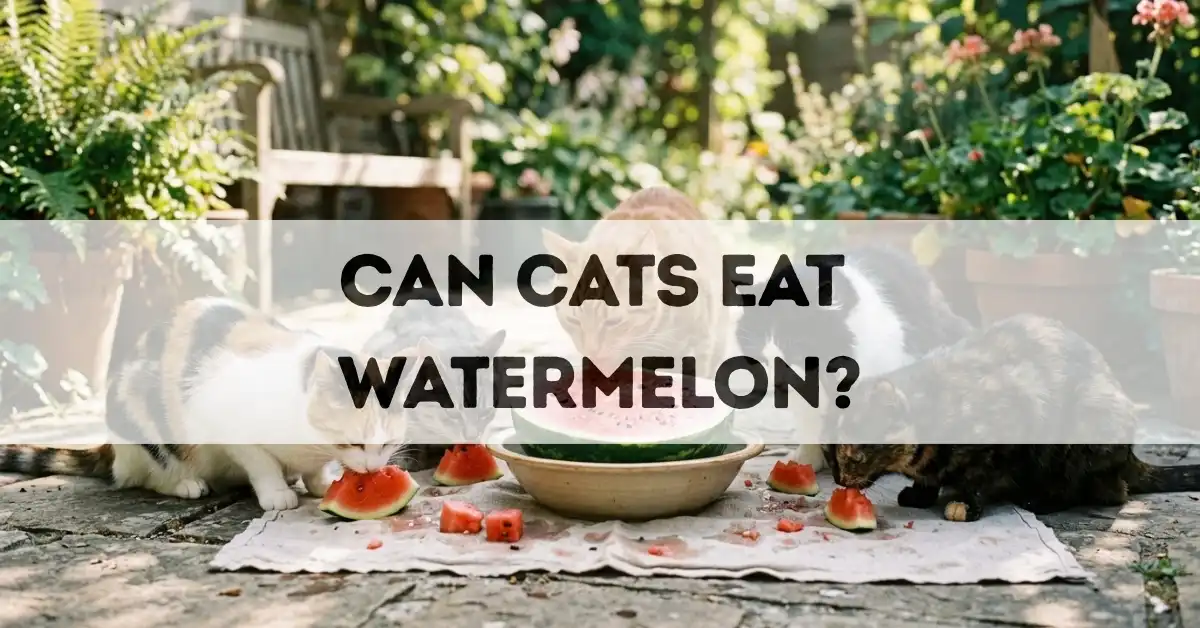
If you are cutting a watermelon on a hot day and your cat comes running to sniff, stare, or try a little lick, you are not alone. Cats are curious. They like new smells, interesting textures, and anything their humans seem excited about. That often leads to one simple question.
Can cats eat watermelon?
Yes, most cats can eat a small amount of plain, seedless, rind-free watermelon flesh as an occasional treat. But there are important rules. Some parts of watermelon are not safe, some cats should avoid it, and too much can upset your cat’s stomach.
This guide explains everything in a clear, practical way, including what is safe, what is not, how much to give, how to prepare it, and what to do if your cat eats seeds or rind.
Watermelon for Cats, Quick Safety Rules (Read This First)
If you only remember a few things, remember these.
Quick answer: Yes, cats can eat a little watermelon flesh.
Safe:
- Plain watermelon flesh only (red or yellow is fine)
- Seedless watermelon, or remove all seeds
- No rind (no green skin and no white layer)
- Tiny pieces
- Only once in a while
Not safe:
- Watermelon rind
- Watermelon seeds (best to avoid)
- Watermelon with salt, sugar, chili, lime, or seasoning
- Watermelon candy, syrups, sorbet, popsicles, or packaged snacks
- Juice with added sweeteners or ingredients
Start small: Offer a piece the size of a pea, then wait 24 hours.
Call your vet: If your cat swallows rind, vomits more than once, seems painful, or stops eating.
Why This Question Matters: Cats Eat Differently Than Humans
Before talking about fruit, it helps to remember what cats are built to eat.
Cats are built to eat meat. Their bodies work best with animal-based protein and fat. This is why cat food is made to provide nutrients cats need, like taurine, in the right amounts.
That does not mean cats can never taste a fruit. Many cats can handle small bites of certain fruits. But it does mean something important:
- Fruit is not needed for a cat to be healthy
- Fruit should never replace balanced cat food
- Too much fruit can cause tummy trouble
So when we talk about watermelon, we are talking about a treat, not a “health food” for cats.
Can Cats Eat Watermelon? The Clear Answer
Yes. Watermelon flesh is usually safe for cats in small amounts.
But it must be served the right way. Watermelon is only safe when it is:
- Plain (no sugar, no salt, no spices)
- Seedless (or all seeds removed)
- Rind-free (only the soft flesh)
- Cut into very small pieces
- Given in a small amount and not every day
Some cats will love it, some cats will ignore it, and some cats will get diarrhea from even a small bite. That is why starting small matters.
Is Watermelon Toxic to Cats?
Watermelon flesh is not toxic to cats.
Watermelon is not like grapes or raisins, which are dangerous to some pets. The main issues with watermelon are not “poisoning.” The main issues are:
- Choking
- Upset stomach (vomiting or diarrhea)
- Too much sugar
- Seeds and rind causing irritation or blockage
So the goal is safe preparation and small portions.
Is Watermelon Safe for Cats? What Makes It Safe or Unsafe
Watermelon can be safe, but only the right part.
The safe part
- The soft, juicy flesh (red or yellow)
The unsafe parts
- The rind (green outside and white layer)
- The seeds (best avoided)
The unsafe versions
- Watermelon mixed with other ingredients, like sugar, salt, spices, or artificial sweeteners
- Processed watermelon treats made for humans
When cat owners get into trouble with watermelon, it is usually because a cat swallowed rind, ate too much, or ate a product that had extra ingredients.
What Is in Watermelon? Simple Nutrition for Cat Owners
Watermelon is mostly water. That is why it feels refreshing.
Here is what matters for cats.
1) Water content
Watermelon is over 90 percent water. If your cat eats a couple of bites, it adds a little extra moisture.
Important: Watermelon is not a treatment for dehydration. If your cat seems dehydrated, sleepy, has sticky gums, or stops eating, call your vet.
2) Natural sugar
Watermelon has natural sugar. Cats do not need sugar. Too much can lead to:
- Loose stool or diarrhea
- Extra calories
- Trouble for cats with diabetes
3) A small amount of fiber
Watermelon has a little fiber, but not enough to use it as a “fiber supplement” for cats.
4) Vitamins and plant compounds
Watermelon contains things like vitamin A and vitamin C, plus plant compounds such as lycopene.
This sounds exciting, but in real life:
- Cats can make their own vitamin C.
- Cats get what they need from balanced cat food.
- The amount of watermelon a cat can safely eat is too small to be a major health boost.
So it is best to think of watermelon as a fun, low-fat treat, not a health supplement.
Why Some Cats Love Watermelon (And Many Do Not)
Cats do not taste sweetness the same way people do. Many cats do not care about fruit at all.
Still, some cats enjoy watermelon because:
- It smells interesting
- It is cool and wet
- It has a soft texture
- They want what you are eating
- They like licking juice
If your cat has no interest, that is normal. Do not force it. Treats should be optional and stress-free.
Benefits of Watermelon for Cats (Realistic and Limited)
Watermelon is not needed, but it can have a few small positives when used correctly.
1) Low fat treat
Watermelon is very low in fat. Compared to some rich treats, a tiny bite of watermelon is not greasy or heavy.
2) Refreshing in warm weather
A small chilled piece can feel nice in summer, especially for cats who enjoy cool foods.
3) Enrichment and variety
Tiny safe bites of new foods can add variety and mental stimulation. For some cats, it turns into a fun “sniff and lick” experience.
That said, the main reason to offer watermelon should be simple: your cat likes it and tolerates it.
Risks of Watermelon for Cats (What Can Go Wrong)
Even safe foods can cause problems if served wrong or in large amounts.
1) Upset stomach (most common)
The most common issue is digestive upset. Too much watermelon, or watermelon that does not agree with your cat, can cause:
- Diarrhea
- Soft stool
- Vomiting
- Gas
- Belly discomfort
Cats have sensitive stomachs. New foods should always be introduced slowly.
2) Too much sugar and extra calories
Watermelon is not high in calories, but it is still “extra.” Too many treats can lead to:
- Weight gain over time
- More begging
- Poor blood sugar control in diabetic cats
3) Choking
Cats can choke on big chunks, especially if they swallow without chewing much.
4) Seeds (best avoided)
Seeds are not a “classic toxin,” but they can:
- Be a choking hazard
- Irritate the stomach or intestines
- Add risk of blockage if enough are swallowed
5) Rind (the biggest danger)
Rind is tough and hard to digest. It can cause:
- Vomiting
- Constipation
- Pain
- Intestinal blockage (a serious emergency)
If you offer watermelon, do not give your cat a wedge to chew. That encourages rind chewing.
Can Kittens Eat Watermelon?
Kittens are growing fast. They need balanced kitten food more than anything else. Their stomachs can also be more sensitive.
Watermelon flesh is not toxic, but it is usually best to be cautious.
Safe approach for kittens:
- Avoid watermelon for very young kittens.
- If your kitten is older and healthy, ask your vet if you are unsure.
- If you offer any, make it tiny, like a pea-sized bit, and monitor for 24 hours.
Kittens do not need fruit, and it should not become a habit.
Can Cats Eat Watermelon Rind?
No. Cats should not eat watermelon rind.
This is the number one watermelon rule for cat owners.
Even a small piece can cause stomach upset, and a larger piece can cause a blockage. Rind is tough and stringy, and cats are not built to digest it well.
If your cat likes chewing rind, the safest plan is to keep watermelon out of reach and only offer small prepared pieces of flesh.
Can Cats Eat Watermelon Seeds?
It is best to avoid seeds.
Can a cat survive a seed or two? Usually, yes. Many cats pass a few seeds without problems.
But seeds are not worth the risk because they can be a choking hazard and they can irritate the digestive tract. Choose seedless watermelon or remove all seeds carefully.
Can Cats Eat Yellow Watermelon?
Yes. Yellow watermelon is just a different type of watermelon. The same rules apply:
- Only the flesh
- No seeds
- No rind
- Tiny pieces
- Only once in a while
Can Cats Eat Watermelon Every Day?
It is not a good idea.
Even though watermelon is mostly water, daily fruit treats can:
- Add unnecessary sugar
- Upset your cat’s stomach over time
- Make your cat less interested in balanced meals
Keep watermelon as an occasional treat, not a daily snack.
How Much Watermelon Can a Cat Eat? (Simple Serving Guide)
A good rule for treats is to keep them small. Many vets suggest treats should be less than 10 percent of daily calories, and many cats do best with even less.
Watermelon is mostly water, so the bigger issue is not calories. The bigger issue is diarrhea from too much fruit.
Best first serving
- One piece the size of a pea, or about 1/2 teaspoon of mashed watermelon
If your cat does fine
Most healthy adult cats can handle about:
- 1 teaspoon to 1 tablespoon occasionally
Some cats can handle up to 2 tablespoons, but many do not need that much. Smaller is safer.
Serving size table (conservative)
| Cat size | Body weight | First try | Usual max if tolerated |
| Small | 6 to 8 lb (2.7 to 3.6 kg) | 1/2 teaspoon | 1 tablespoon |
| Medium | 9 to 12 lb (4 to 5.4 kg) | 1 teaspoon | 1 to 2 tablespoons |
| Large | 13 to 16 lb (5.9 to 7.3 kg) | 1 teaspoon | up to 2 tablespoons |
How often?
- Once a week is plenty.
- Twice a week may be okay for some cats if portions are tiny and your cat tolerates it.
- If your cat gets loose stool, stop.
How to Prepare Watermelon for Cats (Step-by-Step)
This is the safest way to do it.
- Pick a fresh watermelon. Do not use fruit that smells sour or looks slimy.
- Wash the outside first. This helps remove dirt and germs before your knife touches the inside.
- Cut a small slice.
- Remove all seeds. Check carefully.
- Cut away the rind. Remove the green skin and the white layer.
- Cut the flesh into tiny pieces. Think “pea size” or smaller for the first try.
- Serve plain. No salt, sugar, spices, or toppings.
- Stay nearby the first time. Watch to make sure your cat chews and swallows comfortably.
If your cat is a fast eater, mashing the watermelon can be safer than cubes.
Best Ways to Offer Watermelon (Less Mess, Less Risk)
Every cat is different. Here are easy, safe ways.
1) Tiny cubes on a plate
Put 2 or 3 tiny pieces on a clean plate. Let your cat decide.
2) Mashed watermelon
Mash a small amount and offer a little smear. This can reduce choking risk.
3) The lick test
Hold a small piece and let your cat lick it for a second or two. Then put it away. This is a great method for cats with sensitive stomachs.
4) Slightly chilled watermelon
Some cats like it cool. Avoid serving it rock-hard frozen.
What about frozen watermelon?
Tiny frozen pieces can be a fun treat for some cats, but be careful:
- Hard frozen chunks can be a choking risk.
- Some cats may bite hard and hurt a tooth.
If you try it, make the pieces very small, and consider letting them soften a little first.
What About Watermelon Juice, Watermelon Water, Popsicles, or Candy?
This is where people often make mistakes. Many “watermelon” products are made for humans, not cats.
Can cats drink watermelon juice?
A tiny lick of fresh, pure, unsweetened watermelon juice is usually not a big problem.
But juice is easy to overdo. It is sugary and has no real benefit for cats. Many store-bought juices contain added sugar or other ingredients. It is best to skip it.
Can cats drink watermelon water (infused water)?
If it is plain water with a little watermelon flavor and nothing else, a small sip is not likely harmful. But it is not needed, and it can spoil faster than plain water. Fresh clean water is best.
Can cats have watermelon popsicles, sorbet, or ice cream?
Avoid these.
They often include:
- Added sugar
- Dairy (many cats get diarrhea from dairy)
- Stabilizers and flavorings
- Artificial sweeteners (some are dangerous for pets)
Can cats eat watermelon with salt, chili, or lime?
Avoid it. Seasonings can irritate your cat’s stomach. Salt is not a cat treat.
Can cats eat watermelon candy or gummies?
No. These are high in sugar and additives, and they are not made for cats.
Can Cats Be Allergic to Watermelon?
It is not common, but yes, a cat can react badly to almost any food.
Stop feeding watermelon and contact your vet if you notice:
- Itching or scratching more than normal
- Swelling of the face, lips, or around the eyes
- Hives or raised bumps on the skin
- Vomiting
- Trouble breathing (this is urgent)
Most of the time, what owners see is not a true allergy. It is more often simple stomach upset. Either way, if watermelon causes a problem, do not offer it again.
Signs Your Cat Did Not Tolerate Watermelon
After your cat tries watermelon, watch for the next 24 hours.
Common signs of trouble include:
- Vomiting
- Diarrhea or soft stool
- Extra gas
- Drooling
- Pawing at the mouth (something may be stuck, or your cat dislikes the texture)
- Not eating their normal meal
- Acting tired, hiding, or seeming uncomfortable
- Hunched posture or belly sensitivity
If symptoms are mild and go away quickly, watermelon may just not agree with your cat. Remove it from the treat list.
If your cat is vomiting repeatedly, is very sleepy, seems painful, or will not eat or drink, call your vet.
First Time Giving Watermelon: A Simple Plan
If you want the safest approach, use this plan.
- Offer one pea-sized bite of seedless, rind-free flesh.
- Do not offer more the same day.
- Watch the litter box and appetite for 24 hours.
- If everything is normal, next time offer about 1 teaspoon.
- If your cat gets diarrhea, vomiting, or stops eating, stop watermelon completely.
This may feel slow, but it prevents most problems.
What If My Cat Ate Watermelon Seeds?
If your cat ate one or two seeds, it is often not an emergency. Many cats pass them without trouble.
What to do
- Remove any remaining seeds so your cat cannot eat more.
- Watch for vomiting, diarrhea, poor appetite, or straining in the litter box.
- Make sure fresh water is available.
Call your vet if:
- Your cat ate many seeds
- Your cat is a small cat or kitten
- Your cat vomits repeatedly
- Your cat acts painful or stops eating
- Your cat strains to poop or produces no stool
Seeds are not worth the risk, so it is best to avoid them completely.
What If My Cat Ate Watermelon Rind? (More Concerning)
Rind is the part that worries vets the most because it can cause an intestinal blockage.
Quick decision guide
If your cat only licked the rind:
- Wipe the area, remove the rind, and monitor.
- Most cats will be fine.
If your cat chewed and swallowed a small piece:
- Call your vet the same day for advice, especially if your cat is small.
- Watch for vomiting, poor appetite, or constipation.
If your cat swallowed a strip or chunk:
- Contact your vet promptly. They may recommend an exam.
- Do not wait for symptoms to become severe.
Emergency warning signs (possible blockage)
Go to an emergency vet if you see:
- Repeated vomiting
- Your cat cannot keep water down
- Very low energy, hiding, or collapse
- Swollen belly or clear belly pain
- No stool, or straining with no result
Blockages can become serious quickly. It is always better to call early.
Which Cats Should Avoid Watermelon (Or Ask a Vet First)
Even though watermelon flesh is usually safe, some cats should skip it.
1) Cats with diabetes
Watermelon contains sugar. Even small treats can affect blood sugar control. Ask your vet before offering fruit.
2) Overweight cats or cats on a diet plan
Tiny bites are usually not a big calorie problem, but treats can slow weight loss and increase begging. If your cat is on a strict plan, follow it.
3) Cats with sensitive stomachs or chronic digestive issues
Cats with frequent vomiting, chronic diarrhea, or IBD often do worse with “extra” foods. Watermelon can trigger loose stool.
4) Cats with kidney disease or other medical diets
Kidney diets and other prescription diets are carefully designed. Even small treats can matter for some cats. Ask your vet what treats are allowed.
5) Cats that chew and swallow non-food items (pica)
If your cat is the type to eat plastic, string, or plant parts, they may also eat rind. In that case, do not offer watermelon.
Can Watermelon Help Cats With Dehydration or Urinary Problems?
Watermelon is mostly water, so it seems like it should help. In real life, it is not that simple.
Dehydration
A couple of bites of watermelon adds a little fluid, but it does not fix dehydration. If you suspect dehydration, your cat needs proper care. Clean water, wet food, and a vet check are far more important.
Urinary issues
Watermelon does not treat urinary crystals, urinary infections, or urinary blockage. Cats with urinary problems often need a specific diet and careful monitoring. If your cat has a urinary condition, ask your vet before adding treats, including watermelon.
How to Store Watermelon for Your Cat
Safe storage matters because spoiled fruit can upset your cat’s stomach.
- Store cut watermelon in a sealed container in the fridge.
- Use it within 24 to 48 hours.
- Throw it away if it smells sour, looks slimy, or has been left out for a long time.
- Do not leave watermelon sitting out on a plate all day.
Also, always keep the rind and scraps out of reach. Cats can grab things off counters when you least expect it.
Frequently Asked Questions (FAQ)
Can cats eat watermelon at night?
Yes, time of day does not matter. The key is serving a tiny amount and making sure it does not upset your cat’s stomach.
My cat licked watermelon juice, should I worry?
A lick or two of plain watermelon juice is usually fine. Watch for diarrhea or vomiting, and do not offer more.
Why does my cat love watermelon so much?
Some cats like the smell and the watery texture. Some cats enjoy licking cool foods. Curiosity also plays a big role. Interest is normal, as long as you offer it safely.
Can cats eat watermelon skin if it is thin?
No. Even thin rind is tough for cats to digest and can cause choking or blockage.
Can cats eat watermelon seeds if they are white and soft?
It is still best to avoid all seeds. Soft seeds are less risky than hard ones, but they can still irritate the digestive system and are not needed.
Can cats eat watermelon flavored foods?
No. “Watermelon flavored” often means sugar, artificial flavors, and other ingredients that are not made for cats.
Practical Bottom Line: Safe Rules for Feeding Watermelon to Cats
Here are the simplest rules to follow.
- Watermelon flesh is usually safe in tiny amounts
- Never feed rind
- Avoid seeds
- Serve plain, no seasoning
- Start with a pea-sized bite
- Stop if your cat gets vomiting or diarrhea
- Keep treats occasional, not daily
- Ask your vet first if your cat has diabetes, kidney disease, urinary problems, or chronic stomach issues
Conclusion: So, Can Cats Eat Watermelon?
Yes, most cats can eat a small amount of seedless, rind-free watermelon flesh as an occasional treat. It is not toxic, and it is usually safe when prepared correctly. But it is also not a necessary food for cats, and too much can cause stomach upset. The rind is the biggest danger, and seeds should be avoided.
If your cat enjoys watermelon and handles it well, share a couple of tiny bites once in a while. If your cat has health issues, or if you are unsure, your veterinarian can tell you what is safest for your specific cat.
If you tell me your cat’s age, weight, and any health conditions, I can suggest a very conservative “first try” serving size and the safest way to offer watermelon.