





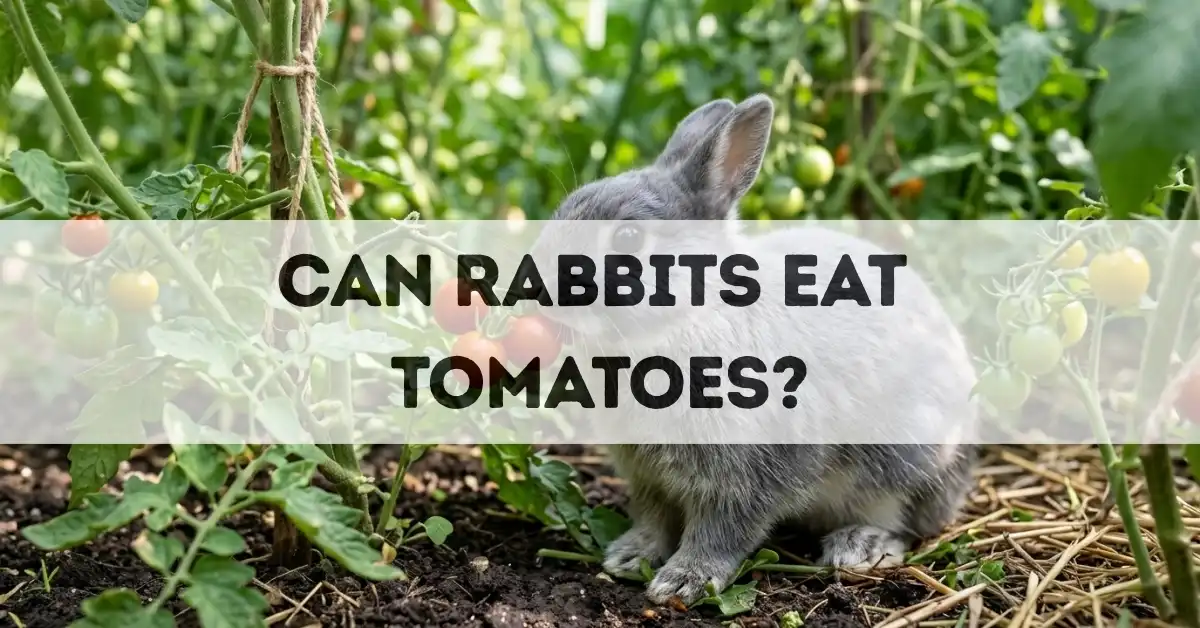
If you have ever been in the kitchen cutting tomatoes and noticed your rabbit staring like they want a bite, you are not alone. Tomatoes are common in many homes, they smell interesting, and rabbits often get curious about whatever their people are eating.
But rabbits are not tiny people. Their stomach and gut work very differently than ours. Some foods that feel harmless to humans can upset a rabbit’s digestion quickly. So it is smart to ask first.
So, can rabbits eat tomatoes?
Yes, rabbits can eat ripe tomato flesh in small amounts, but only as an occasional treat. The green parts of the tomato plant are not safe, and tomatoes have sugar, water, and acidity that can cause tummy trouble if you give too much.
This guide explains what is safe, what is not, how much to offer, how often, which tomato products to avoid, how to introduce tomatoes safely, and what warning signs to watch for.
Tomatoes for Rabbits: Quick Safety Checklist (Read This First)
If you only read one part, read this.
Tomatoes are OK (tiny treat)
- Ripe tomato flesh (fully ripe for that variety)
- Tomato skin (washed)
- Tomato seeds in the small amounts found in a slice
Tomatoes are NOT OK
- Tomato leaves
- Tomato stems
- Tomato vines
- Tomato flowers
- Unripe green tomatoes
- Any tomato plant trimmings from the garden
Avoid all processed tomato foods
- tomato sauce, pasta sauce, ketchup
- canned tomatoes
- tomato soup
- tomato paste
- sun-dried tomatoes
Simple serving rule
- Offer about 1 to 2 teaspoons of ripe tomato flesh, 1 to 2 times per week for a healthy adult rabbit.
When in doubt, give less, not more.
Why Rabbits Can Only Have a Little Tomato
Rabbits need a diet that is mostly fiber. Fiber is what keeps their gut moving the right way and keeps their teeth wearing down properly.
The most important food for rabbits is hay, because hay is packed with fiber. Leafy greens and a measured amount of pellets (if your vet recommends pellets for your rabbit) also help. Treat foods should be small.
Tomatoes are not poisonous when ripe, but they are not a “main food” for rabbits because:
- They are low in fiber compared with hay and leafy greens.
- They have natural sugar, which can upset a rabbit’s gut if you give too much.
- They are very watery, which can lead to softer poop in some rabbits.
- They are acidic, and some rabbits have sensitive stomachs.
A good way to think about it is this: tomato is a treat food, more like a fruit treat, even though many people call it a vegetable in the kitchen.
Are Tomatoes Safe for Rabbits?
Ripe tomato flesh is generally safe for healthy adult rabbits when offered in small amounts.
But tomatoes are not a “free feeding” food. A rabbit should not be allowed to eat a whole tomato, a pile of cherry tomatoes, or tomato every day.
Also, part of tomato safety is knowing what not to feed. Tomato plants have green parts that can be harmful to rabbits.
Which Parts of the Tomato Are Safe for Rabbits?
Safe parts (in moderation)
- Ripe tomato flesh (the red, soft part, or fully ripe yellow or orange varieties)
- A little of the juicy inside
- Seeds in normal amounts inside a slice
- Skin (washed well)
Unsafe parts (do not feed)
- Leaves
- Stems
- Vines
- Flowers
- Unripe green tomatoes
- Garden trimmings from tomato plants
Why the green parts are unsafe (simple explanation)
Tomato plants protect themselves with natural chemicals. Those chemicals are stronger in the green parts of the plant and in unripe green fruit. Rabbits are small, and their bodies are sensitive, so those parts are not safe rabbit food.
You may see the tomato plant described as part of the “nightshade family.” That is true. The main point you need to remember is simple: do not let your rabbit eat any green tomato plant parts.
Rule of thumb: If it is green and part of the plant, do not feed it.
Can Rabbits Eat Tomato Seeds?
Yes, tomato seeds are generally fine in the small amounts found in a piece of ripe tomato.
Tomato seeds are tiny and soft. They are not like large hard pits that can cause choking. Most rabbits swallow them without any problem.
That said, some rabbits do better with less watery, seedy gel. If your rabbit gets soft poop easily, you can offer a firmer piece of tomato flesh and avoid giving a big scoop of the watery center.
Can Rabbits Eat Tomato Skin?
Yes, tomato skin is generally safe if the tomato is ripe and washed well.
Some rabbits will eat the skin and some will leave it behind. Either is fine.
Because tomatoes can have pesticide residue or waxy coatings, washing matters. Rinse and gently rub the skin under running water before you cut the tomato.
Can Rabbits Eat Cherry Tomatoes or Grape Tomatoes?
Yes, rabbits can eat cherry tomatoes and grape tomatoes if they are ripe, raw, and offered in the right amount.
The main problem with cherry tomatoes is portion control. They are small, and it is easy to think, “One more is fine,” and then your rabbit has eaten four or five. That can be too much sugar and water at once.
A practical guideline:
- For a medium rabbit, half to one small cherry tomato is plenty for a treat serving.
- For a small rabbit, start with a quarter to half of one.
Cutting them in half also helps your rabbit eat more slowly.
Can Rabbits Eat Roma Tomatoes, Beefsteak Tomatoes, Heirloom Tomatoes, or Yellow Tomatoes?
Yes, the type of tomato is less important than ripeness and freshness.
- Roma tomatoes are often firmer and less watery, which some rabbits handle well.
- Beefsteak tomatoes are very large, so it is easy to give too much. Offer a very small slice.
- Heirloom tomatoes are fine if they are fresh and ripe.
- Yellow or orange tomatoes can be fine too, as long as they are fully ripe for that variety.
Avoid any tomato that is:
- moldy
- rotten
- leaking with an “off” smell
- overly bruised and turning mushy
- smelling sweet-sour or like it is starting to ferment
When tomatoes start to break down, they can be harder on a rabbit’s stomach.
Can Rabbits Eat Cooked Tomatoes?
It is best to avoid cooked tomatoes for rabbits.
Cooked tomato itself is not the biggest issue. The bigger issue is that cooked tomatoes are usually part of human meals, and human meals often include ingredients that rabbits should not have, like salt, oil, butter, sugar, and spices.
To keep it simple and safe: only offer fresh, raw, ripe tomato flesh.
Can Rabbits Eat Canned Tomatoes?
No. Avoid canned tomatoes.
Canned tomatoes often contain added salt, preservatives, and sometimes extra acidity. Rabbits do not need that, and it can upset their digestion.
Can Rabbits Eat Tomato Sauce, Pasta Sauce, Ketchup, or Tomato Soup?
No, avoid all of these.
These products often contain ingredients that can be harmful to rabbits, such as:
- salt and sugar
- oils
- spices
- onion and garlic (these are not safe for rabbits)
Even a small taste is not worth the risk. If your rabbit is begging while you eat pasta, offer a safe leafy green instead.
Can Rabbits Eat Tomato Paste?
No, avoid tomato paste.
Tomato paste is very concentrated. That means more tomato sugars and acids in a small amount, and it may contain added salt. It is not a good rabbit treat.
Can Rabbits Eat Sun-Dried Tomatoes?
No, avoid sun-dried tomatoes.
Sun-dried tomatoes are “small but strong.” Drying removes water and makes the sugars more concentrated. Many sun-dried tomatoes are also packed with salt or oil. That combination is not rabbit-friendly.
Nutrition in Tomatoes: What They Provide and What They Do Not
Tomatoes contain:
- lots of water
- some vitamins and minerals, like potassium
- natural plant compounds like lycopene (an antioxidant)
But tomatoes are:
- low in fiber
- not essential for rabbit health
- not a replacement for hay and leafy greens
Also, rabbits do not need vitamin C in the way humans do. Their bodies make it themselves. So while tomatoes have vitamin C, it is not a reason to feed tomatoes.
The best way to use tomatoes is simply as a small, occasional treat for variety.
Benefits of Feeding Tomatoes (When Done the Safe Way)
Tomatoes are not a must-have food, but tiny amounts can have a few gentle benefits.
1. Variety and enrichment
Rabbits enjoy different tastes and textures. A small tomato bite can make treat time interesting.
2. A little extra hydration
Tomato is watery, so it can add a small amount of moisture. This is not a substitute for water, but it can help a little, especially for rabbits that prefer getting moisture from fresh foods.
3. A high-value treat for bonding
Some rabbits love tomato. A tiny bite can help with training, like coming when called or feeling comfortable with gentle handling. Treats should stay small so your rabbit still eats plenty of hay.
Risks and Concerns: Why Tomatoes Must Be Limited
1. Soft poop or diarrhea
Too much tomato can mean too much water and sugar for a rabbit’s gut.
Rabbits should have many firm, round poop pellets every day. If poop becomes soft, mushy, or watery, it is a sign the diet may be too rich or too watery.
2. Messy cecotropes
Rabbits make two kinds of poop. One kind is the normal dry pellets you see in the litter box. The other kind is called cecotropes.
Cecotropes are soft “night poops” rabbits normally eat, because they contain extra nutrients. You may never see them because your rabbit usually eats them right away.
If your rabbit has too many treats, you might notice cecotropes left behind, squished, or stuck to fur. That is often a sign to cut back on sweet or watery foods, including tomato.
3. Gas and belly discomfort
Some rabbits get gassy from sugary or acidic foods. Gas can be painful. A rabbit in pain may sit hunched, press their belly to the floor, or refuse to move much.
4. Picky eating and less hay
Sweet foods can make some rabbits ignore hay. That is dangerous, because hay is what keeps the gut moving and helps teeth wear down.
If you notice your rabbit begging for treats and eating less hay, treats need to be reduced.
5. Weight gain
Even though tomato is not as sugary as some fruits, it still has sugar. Treat calories add up. For overweight rabbits, it is often better to skip tomatoes or keep them extremely rare.
6. Tomato plant toxicity (green parts)
This is the biggest tomato-specific risk. Leaves, stems, vines, flowers, and unripe green tomatoes are not safe for rabbits. Keep rabbits away from tomato plants in gardens, patios, and compost piles.
7. Pesticides and residues
Tomatoes may have pesticide residue. Washing helps. Organic tomatoes can reduce exposure, but washing is still important.
How Much Tomato Can a Rabbit Eat? (Portion Guide)
There is no perfect serving size for every rabbit, but there are safe guidelines.
A good general rule for a healthy adult rabbit:
- 1 to 2 teaspoons of ripe tomato flesh, per serving
- 1 to 2 times per week
If you want an easy guide by rabbit size, use this.
Tomato serving size by rabbit size
| Rabbit size | Example weight | Tomato serving (ripe flesh) | How often |
| Small | 2 to 3 lb (1 to 1.5 kg) | about 1 teaspoon | about 1 time per week |
| Medium | 4 to 7 lb (1.8 to 3.2 kg) | 1 to 2 teaspoons | 1 to 2 times per week |
| Large | 8 to 12 lb (3.6 to 5.4 kg) | about 2 teaspoons | 1 to 2 times per week |
If your rabbit has a sensitive stomach, start with half of these amounts or skip tomato completely.
Important: More is not better. A rabbit can be healthy and happy with no tomato at all.
How Often Can Rabbits Eat Tomatoes?
For most healthy adult rabbits:
- Once or twice a week is plenty.
If your rabbit also gets other treats like fruit pieces or sweet vegetables, tomatoes should be part of that same treat “budget.” In other words, do not give tomatoes plus other sweet treats every day.
A simple way to do it:
- Pick two days a week for treats.
- Keep the treats tiny.
- On other days, stick to hay and leafy greens.
When Can Baby Rabbits Eat Tomatoes?
It is best to avoid tomatoes for baby rabbits.
Young rabbits have extra-sensitive digestion, and their gut bacteria are still settling into balance. Rich or sugary foods can cause problems faster in babies.
A cautious approach that many rabbit owners follow:
- Avoid tomatoes until the rabbit is at least 6 months old
- Only offer tomato after your rabbit is already doing well with hay and leafy greens
- Introduce new foods slowly, one at a time
If your rabbit is a baby or a young teenager rabbit and you are unsure, ask a rabbit-savvy vet what is best for your situation.
How to Introduce Tomato Safely (Step-by-Step)
If your rabbit has never had tomato before, go slow. You are testing how their body handles it.
Step 1: Choose a properly ripe tomato
Pick a tomato that is fully ripe. For most tomatoes, that means a strong red color. For yellow or orange varieties, it means fully colored and soft enough to be ripe, not hard and greenish.
Step 2: Wash it well
Rinse under running water and gently rub the skin.
Step 3: Remove all green parts
No stem. No leaf bits. No vine.
Step 4: Offer a tiny test piece
Start with a piece about the size of your fingernail, or smaller for tiny rabbits.
Step 5: Wait and watch for 24 hours
Watch for:
- soft poop or diarrhea
- fewer poop pellets
- a rabbit that eats less hay
- signs of belly pain (hunched posture, tooth grinding, not wanting to move)
- low energy
Step 6: If everything stays normal, offer tomato again later
If your rabbit does fine, you can offer a normal treat portion another day. Keep tomato as an occasional treat, not a daily food.
Best Ways to Prepare Tomato for Your Rabbit
Use these tips to keep tomato feeding safe and simple.
- Serve raw only
- Serve plain, with no salt, sugar, oil, herbs, or spices
- Serve at room temperature if possible
Very cold foods can bother some rabbits, so room temperature is a safe choice. - Cut into small pieces
This helps with portion control and stops the rabbit from gulping a large piece quickly. - Avoid overly mushy or fermenting tomato
If it smells odd, do not feed it.
What Does “Too Much Tomato” Look Like?
This is one of the most helpful things to know, because rabbits often beg for treats even when their stomach cannot handle more.
Signs your rabbit may have had too much tomato:
- poop becomes softer, smaller, or not well formed
- poop looks normal but there are fewer pellets than usual
- cecotropes are left behind, squished, or stuck to fur
- your rabbit seems gassy or uncomfortable
- your rabbit eats less hay but begs for more treats
If you see these changes after tomato, stop tomato for a while and focus on hay and water.
When Should You Stop Feeding Tomatoes Completely?
Some rabbits do not do well with tomatoes, even in small amounts.
It is smart to stop tomatoes if you notice:
- diarrhea (watery stool)
- repeated soft poop after tomato, even with tiny portions
- repeated messy cecotropes after tomato
- a rabbit that looks uncomfortable after eating tomato
- a rabbit with a history of GI problems where your vet has advised a strict diet
Remember, tomato is optional. You are not taking away an essential nutrient by skipping it.
What If My Rabbit Ate Tomato Leaves, Stems, or Vine?
This happens most often when rabbits have access to a garden, patio plants, or kitchen scraps.
If your rabbit nibbled tomato leaves, stems, or vine, do not panic, but take it seriously.
What to do right away
- Remove access immediately so your rabbit cannot eat more.
- Check how much was eaten if you can.
- Offer plenty of hay and fresh water.
- Watch appetite and poop closely for the next 24 hours.
Call a rabbit-savvy vet for guidance if:
- you think your rabbit ate a noticeable amount
- your rabbit is small
- your rabbit already has health problems
- your rabbit seems “off” in any way
Call urgently if you see emergency signs
Rabbits can get very sick quickly when their gut slows down.
Seek urgent vet help if:
- your rabbit stops eating for 6 to 8 hours
- you see very few or no poop pellets
- your rabbit seems in pain (hunched, tooth grinding, unwilling to move)
- diarrhea is watery or does not stop
It is always better to call early than to wait.
Tomatoes and Common Rabbit Health Situations
If your rabbit gets soft poop easily
Tomatoes can make this worse because they are watery and have sugar. You may want to avoid tomatoes or keep them extremely rare.
If your rabbit is overweight
Treats should be very limited. Tomato might be too tempting and can lead to more begging and extra calories. Many owners choose to skip tomato for overweight rabbits.
If your rabbit has had GI stasis before
GI stasis is when the gut slows down too much. It can become an emergency. If your rabbit has a history of GI stasis, ask your vet about treat choices. Some rabbits with sensitive guts do best with no sweet treats, including tomato.
If your rabbit has dental problems
Tomato is soft, so it does not help with tooth wear. Hay is the main tool for tooth health. Tomato can still be a tiny treat, but it should never replace fiber-rich foods.
Tomatoes vs Other Treats: Is Tomato a Good Choice?
Some owners wonder if tomato is “better” than other treats.
Here is a simple way to compare:
- Tomato is usually less sugary than many fruits like banana, grapes, or mango.
- Tomato is usually more watery and more acidic than many leafy greens.
- Tomato is much lower in fiber than leafy greens, and far lower than hay.
So tomato can be a reasonable treat for some rabbits, but it is still a treat. If your rabbit gets soft poop easily, a small piece of a leafy green is often a safer “treat” than tomato.
Common Mistakes When Feeding Tomatoes to Rabbits
Avoid these common problems.
Mistake 1: Feeding tomato daily
Even if your rabbit loves it, daily tomato can lead to soft poop, messy cecotropes, and picky eating.
Mistake 2: Letting rabbits chew tomato plants in the garden
The green parts are not safe. Fence off tomato plants and do not let rabbits roam near them.
Mistake 3: Giving too many cherry tomatoes
Cherry tomatoes are easy to overfeed. One small tomato can already be a full serving for many rabbits.
Mistake 4: Feeding tomato sauce or soup
These often contain salt, oil, sugar, onion, garlic, and spices. They are not safe for rabbits.
Mistake 5: Using tomato to replace greens
Tomato is not a vegetable serving for a rabbit. It should not replace leafy greens or hay.
Frequently Asked Questions (FAQ)
Can rabbits eat tomatoes every day?
It is not recommended. Tomatoes have sugar, water, and acidity, and daily tomato can upset digestion. For most rabbits, once or twice a week is plenty.
Can rabbits eat tomato leaves?
No. Tomato leaves are not safe for rabbits. Keep rabbits away from tomato plants and trimmings.
Can rabbits eat tomato plants from the garden?
No. Do not let rabbits eat tomato plants, vines, stems, leaves, or flowers. Also watch for pesticide sprays and fertilizers used in gardens.
Can rabbits eat green tomatoes?
No. Unripe green tomatoes should be avoided.
Can rabbits eat cherry tomatoes?
Yes, if ripe, and only in small amounts. Half to one small cherry tomato is often plenty for a treat serving.
Can rabbits eat tomato seeds?
Yes, the seeds in a small piece of ripe tomato are generally fine.
Can rabbits eat tomato skin?
Yes, if the tomato is ripe and washed well.
Can rabbits drink tomato juice?
No. Tomato juice is too acidic and concentrated, and store-bought versions may have additives. Fresh water is the right drink for rabbits.
Can rabbits eat cooked tomatoes?
It is best to avoid cooked tomatoes. Cooked tomato is usually part of seasoned human food, which is not safe for rabbits.
Can rabbits eat canned tomatoes?
No. Canned tomatoes can contain salt and preservatives, and they are not a good rabbit food.
Can rabbits eat tomato sauce or ketchup?
No. These often contain salt, sugar, oils, spices, and sometimes onion or garlic, which are not safe for rabbits.
Can rabbits eat tomato paste?
No. Tomato paste is very concentrated and may contain salt.
Can rabbits eat sun-dried tomatoes?
No. Sun-dried tomatoes have concentrated sugars and are often salty or packed in oil.
Are tomatoes a fruit or a vegetable for rabbits?
In the kitchen people call them vegetables, but for rabbit feeding, tomatoes act more like a fruit treat because of their sugar and acidity. Treat tomatoes like an occasional sweet treat, not like a leafy green.
The Safest Way to Include Tomatoes in a Rabbit Diet
If you choose to give your rabbit tomato, keep the rest of the diet strong and simple.
A rabbit-friendly daily base looks like this:
- Unlimited hay, all day and all night
- Fresh leafy greens, in amounts that suit your rabbit
- Pellets in a measured amount, if your vet recommends them for your rabbit’s age and health
- Fresh water, always available
Then treats like tomato should be:
- tiny
- occasional
- only ripe tomato flesh
- never the plant parts
- never processed tomato foods
If your rabbit does not tolerate tomato well, skip it. Your rabbit can still have a healthy, happy life without tomatoes.
Final Verdict: Can Rabbits Eat Tomatoes?
Yes, rabbits can eat tomatoes, but only the ripe tomato flesh, only in small amounts, and only as an occasional treat. Tomato leaves, stems, vines, flowers, and unripe green tomatoes are not safe, and processed tomato products like sauce, soup, ketchup, and canned tomatoes should be avoided.
If your rabbit handles tomato well, a tiny bite once or twice a week can be a fun treat. If you see any signs of digestive upset, stop tomatoes and focus on hay and water, and call a rabbit-savvy vet if your rabbit seems unwell.
If you tell me your rabbit’s age, weight, and whether they have had soft poop, messy cecotropes, or GI stasis before, I can help you pick the most conservative tomato portion for your rabbit.