










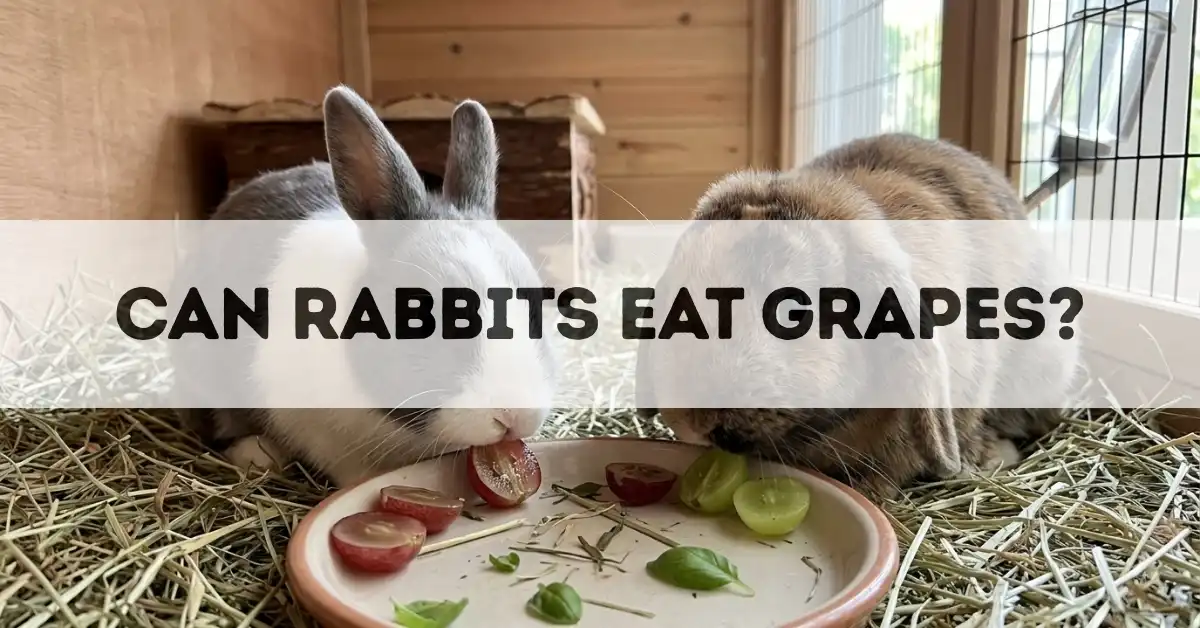
If you are eating grapes and your rabbit comes hopping over like, “Can I have some?” it is normal to wonder if sharing is safe. Grapes look harmless. They are soft, sweet, and easy to bite.
But rabbits are not like people. A rabbit’s tummy is built for one main job: digesting lots and lots of fiber, mostly from hay. Sugary foods can upset that system quickly.
This guide answers the big question, can rabbits eat grapes, and it also explains how many grapes are safe, how often to offer them, what risks to watch for, and what to do if your rabbit steals too many.
- Can rabbits eat grapes? Yes, but only as a small treat
- Are grapes toxic to rabbits? Grapes are generally considered non-toxic to rabbits
- Best for: Healthy adult rabbits that already eat plenty of hay
- Avoid for: Baby rabbits, rabbits with sensitive tummies, overweight rabbits, rabbits that rarely eat hay
- Safe portion: About 1 teaspoon of grape total (often half a grape to 1 small grape)
- How often: Once a week or less is a smart, safe pace
- Biggest risk: Too much sugar causing soft stool, tummy pain, and gut slowdown
- Safer serving: Wash well and cut into small pieces
If you only remember one thing, remember this: grapes are not a “rabbit food,” they are a tiny treat.
Can Rabbits Eat Grapes?
Yes, rabbits can eat grapes in small amounts as an occasional treat.
Grapes are sweet, and they have a lot of natural sugar. That sugar is the main problem. Even though it is “natural,” it still acts like sugar inside your rabbit’s gut.
So grapes fit into the category of: safe in tiny amounts, easy to overdo.
Why Rabbit Diet Matters So Much (Simple Explanation)
Rabbits are built to eat high-fiber plants all day. Their bodies expect:
- Unlimited hay
- Steady chewing
- A gut that stays moving
- Helpful gut bacteria that digest fiber
Inside your rabbit’s belly is a special area called the cecum (say it like “see-kum”). You can think of it like a fiber mixing jar. Helpful bacteria live there and help your rabbit get nutrition from hay and leafy plants.
When a rabbit eats too much sugar (from fruit like grapes), the wrong bacteria can grow too fast. That can lead to:
- Gas and belly discomfort
- Soft stool and messy bottoms
- A drop in appetite, especially less hay eating
- A dangerous gut slowdown called GI stasis (when the gut stops moving normally)
This is why rabbit owners take treats seriously. With rabbits, “just a little too much” can sometimes cause big tummy trouble.
Are Grapes Safe for Rabbits?
Grapes are “safe but limited”
For most healthy adult rabbits, grapes are generally considered non-toxic and safe in tiny portions.
The main safety issue is not poison. The main issue is:
- High sugar
- Low fiber
- Easy to overfeed
Some rabbits can handle a tiny bit of fruit without trouble. Other rabbits get soft stools even after a small bite. That is why you should introduce grapes slowly and watch poop and appetite.
When grapes are not a good idea
Even if grapes are not toxic, they may not be a good choice if your rabbit is:
- A baby rabbit (young rabbits have very sensitive digestion)
- Overweight or prone to weight gain
- Not eating much hay
- Prone to soft stools or messy bottoms
- Recovering from a tummy problem
- On a vet-recommended special diet
If any of these fit your rabbit, it is usually best to skip grapes and use a safer treat like herbs instead.
What Is in a Grape? (And Why It Matters to Rabbits)
Grapes contain:
- A lot of water
- Natural sugars (the big concern)
- Very little fiber
- Small amounts of vitamins and antioxidants
In humans, grapes can sound “healthy.” In rabbits, health is mostly about fiber. Rabbits do not need fruit to get vitamins if they are eating:
- Unlimited hay
- A balanced amount of leafy greens
- A small, correct amount of pellets (if pellets are part of their diet)
The key problem: sugar vs. fiber
Rabbits do best with high fiber, low sugar foods.
Grapes are the opposite: low fiber, higher sugar.
So grapes can be a treat, but they should never be a regular part of the diet.
Are Grapes Bad for Rabbits?
Grapes are not “bad” in the sense of being poison. But they can become bad for your rabbit if they are given too often or in big amounts.
Grapes can be a problem because they may:
- Cause soft stool or diarrhea-like mess
- Upset gut bacteria
- Make a rabbit eat less hay (hay is the most important food)
- Add extra calories that lead to weight gain
So the better way to think about it is:
Grapes are okay sometimes, but too much can cause real trouble.
Small Benefits of Grapes (Why Some Owners Use Them)
Grapes are not needed, but they can be useful in a few situations, if used carefully.
1) Bonding and trust
A tiny piece of grape can be a “high-value” treat to help a shy rabbit feel safe around you.
2) Training help
Very small grape pieces can help with training, like:
- Coming when called
- Hopping into a carrier
- Sitting calmly for grooming
The key is to use tiny pieces, not full grapes.
3) A special reward after a hard moment
Some owners use a tiny fruit piece after nail trims or vet visits. Again, small is the safe choice.
Even with these benefits, grapes should stay rare. There are many treats with less sugar, like fresh herbs.
Risks of Feeding Grapes to Rabbits
1) Soft stool and messy bottom
This is one of the most common issues. Too much sugar and water can make stool softer than normal.
A messy bottom is not just gross. It can cause:
- Skin irritation
- Bad smell and dirty fur
- Problems in warm months because flies may be attracted to dirty fur
If you notice a messy bottom, stop grapes and call your vet if it does not improve quickly.
2) Tummy gas and pain
Sugar can upset the balance of gut bacteria. This can cause gas. Rabbits cannot burp like people, so gas can be painful.
Signs of tummy pain can include:
- Sitting hunched
- Not wanting to move
- Pressing belly to the floor
- Tooth grinding (a pain sign)
- Not eating hay
3) Gut slowdown (GI stasis risk)
If your rabbit’s gut slows down, it can become an emergency. Grapes do not “cause” GI stasis by themselves in every rabbit, but overfeeding sugary treats can raise the risk by upsetting the gut.
4) Weight gain and obesity
Grapes are much more calorie-dense than hay. If a rabbit gets frequent fruit treats, weight can creep up.
Extra weight can lead to:
- Less running and jumping
- Joint pain
- Trouble cleaning their bottom
- Higher risk of sore hocks (painful feet)
- More health problems over time
5) Dental issues (indirect)
Rabbit teeth grow constantly. Chewing hay wears them down.
Sugary treats do not help tooth wear. Also, if treats reduce hay eating, teeth may not wear properly.
So grapes can indirectly contribute to dental problems if they replace hay in the diet.
6) Choking risk (small but real)
Rabbits do not choke as often as some animals, but a whole grape can be grabbed and swallowed quickly. This is more risky for smaller rabbits or rabbits that snatch food fast.
The safer move is simple: cut grapes into halves or quarters.
“But I Heard Grapes Are Toxic.” Important Clarification
Many people know grapes can be dangerous for dogs because grapes can cause serious kidney issues in some dogs.
For rabbits, grapes are generally considered non-toxic. There is not the same well-known grape poisoning problem seen in dogs.
Still, keep these two truths together:
- Grapes are not commonly listed as poisonous for rabbits
- Grapes can still cause serious tummy problems if overfed
So do not treat grapes like a free snack. Treat them like candy, only sometimes, and only a little.
How Many Grapes Can a Rabbit Eat? (Safe Portion Sizes)
A simple, safe portion rule
For most healthy adult rabbits, a good limit is:
About 1 teaspoon of grape total per treat day.
That often equals:
- Half a grape for small rabbits
- One small grape for medium rabbits
- One grape for large rabbits
Some rabbits do best with even less, like one tiny slice.
Portion guide by rabbit size (cautious and practical)
Small rabbits (under about 4 lb or 1.8 kg):
- 1 or 2 small pieces, about ¼ to ½ grape total
Medium rabbits (about 4 to 8 lb or 1.8 to 3.6 kg):
- ½ to 1 small grape total
Large rabbits (over about 8 lb or 3.6 kg):
- 1 grape total, cut into pieces
If your rabbit is overweight, the safest portion is usually: skip grapes or offer a tiny herb sprig instead.
Important: do not stack sugary treats
If you give grapes on a certain day, try not to also give:
- Banana
- Apple
- Raisins
- Commercial sugary treats
It is easy to stack sugar without noticing.
How Often Can Rabbits Eat Grapes?
For most rabbits, the safest schedule is:
- Once a week or less
Many owners choose:
- Twice a month
This is often even safer, especially for rabbits that gain weight easily.
A daily grape habit is not a good idea. Daily fruit can:
- Reduce hay eating
- Increase soft stool risk
- Add too many calories
If your rabbit begs for sweets, it does not mean they need them. It just means grapes taste good.
How to Feed Grapes Safely (Quick Checklist)
Use this simple routine:
- Wash the grape well under running water, rub gently for 20 to 30 seconds, do not use soap
- Serve at room temperature (very cold foods can upset some rabbits)
- Cut it into halves or quarters
- Offer after your rabbit has eaten hay
- Give one small piece and stop
- Watch poop and appetite for 24 to 48 hours
This is the “safe and boring” method, and boring is good for rabbit tummies.
How to Introduce Grapes for the First Time (Step-by-Step)
If your rabbit has never had grapes before, go slowly.
Step 1: Start tiny
Offer a piece the size of a pea, or even smaller.
Step 2: Wait and watch for 1 to 2 days
Check:
- Are poops still round, dry, and normal sized?
- Is your rabbit eating hay like normal?
- Is your rabbit active and comfortable?
Step 3: Only try again if everything looks normal
If all is well, you can offer a slightly bigger piece another week.
Step 4: Keep grapes rare
Even if your rabbit handles grapes perfectly, keep them as an occasional treat.
Signs Your Rabbit Ate Too Many Grapes (Or Grapes Did Not Agree)
Stop feeding grapes and watch closely if you notice:
- Soft poop, pudding-like poop, or a messy bottom
- Fewer poops than normal
- Very small poops
- No poops
- Less interest in hay
- Hiding, sitting hunched, not wanting to move
- Tooth grinding (pain sign)
- A belly that looks bloated or feels tight
When to call a rabbit-savvy vet
Call right away if your rabbit:
- Stops eating
- Stops pooping
- Seems in pain (hunched posture, tooth grinding)
- Acts weak or very sleepy
Rabbits can get worse quickly when their gut slows down. It is always safer to call early.
My Rabbit Stole Grapes Off the Table, What Should I Do?
First, do not panic. Many healthy adult rabbits will be okay after one grape.
If your rabbit ate 1 grape (or a small amount)
Do this:
- Remove access to more grapes
- Offer fresh hay and water
- Watch poop and appetite for 24 to 48 hours
If your rabbit ate several grapes (a larger amount)
Do this:
- Offer unlimited hay right away
- Avoid all other treats for at least a few days
- Watch closely for smaller poops, no poops, or not eating
- Call a rabbit-savvy vet for advice, especially if your rabbit has a sensitive tummy
What not to do
- Do not try to “fix it” with human medicines
- Do not wait a full day if your rabbit stops eating or pooping
Can Baby Rabbits Eat Grapes?
No, it is best to avoid grapes for baby rabbits.
Baby rabbits have a changing digestive system as they grow. Sugary foods can upset their gut balance fast, and that can become serious.
A cautious rule many rabbit owners follow is:
- No fruit until at least 6 months old, and even then only tiny amounts
If you are not sure how old your rabbit is (common with rescues), it is safer to skip fruit treats.
Can Rabbits Eat Red Grapes or Green Grapes?
Yes. Red grapes and green grapes are similar when it comes to rabbit safety.
Both are:
- Sweet
- Sugary
- Low in fiber
So treat both the same way: tiny portions, rarely.
Can Rabbits Eat Grape Skins?
Yes, rabbits can eat grape skins. The skin is not a special health boost for rabbits, but it is not usually a problem either.
The bigger concern is what might be on the skin:
- Pesticide residue
- Dirt
- Mold from bad storage
That is why washing matters. Rabbits are small, so tiny leftovers of sprays can matter more.
If the grape skin looks wrinkled, sticky, or moldy, do not feed it.
Can Rabbits Eat Grapes With Seeds?
It is best to avoid grapes with seeds.
Most store grapes are seedless, but if you have seeded grapes:
- Seeds are not a useful food for rabbits
- Seeds can be a choking risk
- Seeds can be hard to manage in a tiny mouth
If you cannot remove seeds easily, choose a different treat.
Can Rabbits Eat Raisins (Dried Grapes)?
Raisins are not recommended for rabbits.
Here is why:
- Raisins have much more concentrated sugar than fresh grapes
- They are easy to overfeed because they are small
- They can lead to soft stool and weight gain faster
Some people use a single raisin for training, but it is risky because it makes it easy to give “just one more.” If you want a grape-type treat, fresh grape pieces are a safer choice than raisins, but still rare.
Can Rabbits Eat Frozen Grapes?
It is better not to feed frozen grapes.
Frozen grapes are:
- Very cold
- Hard to bite
- Not as easy on a sensitive tummy
If you want to share grapes, use a fresh grape at room temperature, cut into small pieces.
Can Rabbits Eat Grape Leaves or Grape Vines?
This is a common question for people with gardens.
Grape leaves and vines are not a common rabbit food, and outdoor plants can have:
- Pesticides or plant sprays
- Fertilizer residue
- Mold, bugs, or bird droppings
Because of these risks, the safest advice for most owners is:
Do not feed grape leaves or grape vines unless you are 100 percent sure the plant is clean and has never been sprayed.
For everyday treats, it is safer to stick with rabbit-safe store greens and herbs.
Grapes vs. Other Fruits: Are Grapes Better or Worse?
In “rabbit treat terms,” grapes are similar to many fruits. They are sweet and sugary. They are not a daily food.
Grapes can be easier to overfeed than some other fruits because:
- They look small and harmless
- They are easy to pop into a mouth
- Rabbits often love them and beg for more
If you give fruit at all, rotating tiny pieces is often better than giving one fruit often. Still, many rabbits do perfectly well with no fruit at all.
Healthier Alternatives to Grapes (Still Special, Less Sugar)
If you want to give your rabbit something special without so much sugar, these are often better choices.
Low-sugar treat options many rabbits love
- Fresh herbs: cilantro, parsley, basil, mint, dill
- Leafy greens: romaine, spring mix (no iceberg lettuce), arugula
- A small piece of bell pepper (many rabbits like it, and it is not sugary like fruit)
Always introduce new foods slowly, just like grapes.
If you want fruit specifically
Fruit is still sugary, but these can be easier to portion:
- Blueberry: one berry, cut in half
- Strawberry: a thin slice
Even with these, keep fruit rare.
What Should a Rabbit’s Diet Look Like? (So Grapes Stay a Treat)
Grapes are safest when the main diet is strong.
A healthy adult rabbit diet usually looks like:
- Unlimited grass hay (timothy, orchard, meadow, or other grass hays)
- Fresh water all day
- Leafy greens daily (in the right amounts for your rabbit)
- Pellets measured carefully (not a full bowl, and not for unlimited snacking)
- Treats like grapes only occasionally
The golden rule
Hay first, always.
If your rabbit is not eating hay well, do not add fruit. Focus on fixing the main diet first, and talk to a rabbit-savvy vet if hay refusal continues.
Frequently Asked Questions (FAQ)
Can rabbits eat grapes every day?
No. Daily grapes are too much sugar. Over time, daily fruit can lead to soft stools, less hay eating, and weight gain.
How many grapes can a rabbit eat in one day?
For most healthy adult rabbits, keep it to about 1 teaspoon of grape total, often half a grape to 1 small grape, and not every day. Many rabbits do best with less.
Can rabbits eat red grapes and green grapes?
Yes. Both are fine in tiny amounts. Treat both the same way.
Can rabbits eat grapes with skin on?
Yes, but wash the grape well first. The skin can carry pesticide residue and dirt.
Can rabbits eat grapes with seeds?
It is best to avoid seeded grapes. Seeds are unnecessary and can be a choking risk.
Can rabbits eat raisins?
Not recommended. Raisins are dried grapes, so the sugar is much more concentrated and easy to overfeed.
Can rabbits eat frozen grapes?
Not recommended. Frozen grapes are very cold and hard, and they can be tough on a rabbit’s mouth and digestion.
My rabbit ate grapes, what should I watch for?
Watch for normal hay eating, normal energy, and normal poops. Call a rabbit-savvy vet right away if your rabbit stops eating, stops pooping, or looks like they are in pain.
Are grapes bad for rabbits?
Grapes are not poison for rabbits, but they can be “bad” if overfed because they are sugary and low in fiber.
Can Rabbits Eat Grapes?
Yes, rabbits can eat grapes, but only in very small amounts and only as an occasional treat.
If you want the safest approach, follow this simple plan:
- Offer half a grape to one small grape, cut into pieces
- Feed grapes once a week or less
- Wash grapes well and serve at room temperature
- Watch your rabbit’s poop and appetite afterward
- Keep hay as the main food every day
Grapes should never replace hay or leafy greens. Think of them as a tiny taste of something sweet, not a snack.