





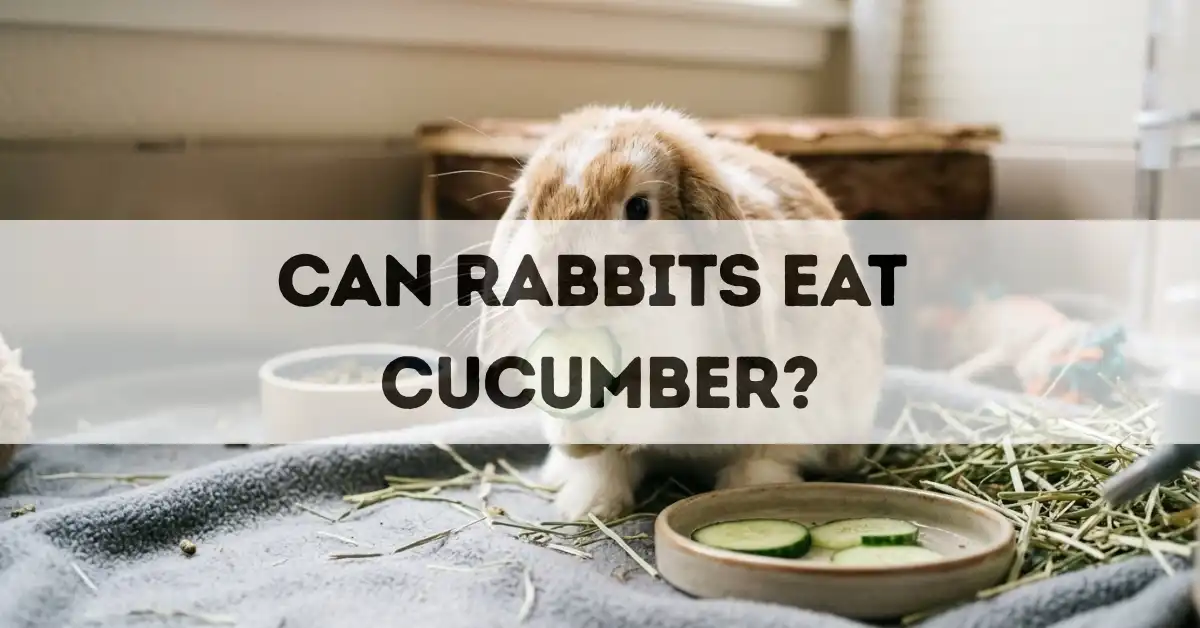
If you slice a cucumber in the kitchen and your rabbit runs over like it is the most exciting thing ever, that is very normal. Cucumbers smell fresh, they crunch, and they have lots of water. They look like the kind of food that should be perfect for rabbits.
But rabbit tummies are not the same as human tummies. A food can be “not poisonous” and still cause problems if you give too much, give it too often, or feed it to the wrong rabbit at the wrong time.
So, can rabbits eat cucumber?
Yes. Most healthy adult rabbits can eat cucumber in small amounts. Cucumber is not toxic to rabbits. The important part is portion size, how often you feed it, and how your rabbit handles watery foods.
This guide will show you, step by step, how to feed cucumber safely. You will learn the benefits, the risks, how much to give, how often, whether the peel and seeds are safe, which cucumbers are best, and what signs to watch for if your rabbit’s tummy does not agree with it.
Quick Answer: Can Rabbits Eat Cucumber?
Yes, rabbits can eat cucumber. It is safe for most rabbits as an occasional treat.
Cucumber is:
- Very high in water
- Low in sugar
- Very low in fiber
That last part matters most. Rabbits need a lot of fiber every day, mainly from hay. Because cucumber is mostly water and not much fiber, it should not be a daily main veggie and it should never replace hay.
A good way to think about it is this:
Cucumber is a hydrating snack, not a core food.
Is Cucumber Safe for Rabbits?
Cucumber is generally safe for rabbits when it is:
- given in small portions
- introduced slowly
- served raw and plain
- washed well
- fed to a rabbit with a stable digestive system
Most problems happen when rabbits eat too much cucumber, especially if they are sensitive to watery vegetables.
Why Rabbit Diet Basics Matter Before Adding Cucumber
Rabbits have very sensitive tummies. Their digestive system is built to handle lots of fiber all day long. Fiber keeps food moving through the gut and helps rabbits stay healthy.
Here is the simple rabbit diet foundation:
- Unlimited hay (this is the number one food)
- Fresh leafy greens daily (introduced slowly and rotated)
- A measured amount of pellets (often smaller amounts for adults, depending on your vet’s advice)
- Treats (small, sometimes)
Why hay is so important
Hay does two big jobs:
- It keeps digestion moving.
- It helps wear down teeth, because rabbit teeth never stop growing.
Where cucumber fits
Cucumber does not bring much fiber. It brings mostly water. That is why cucumber should stay in the treat category.
If cucumber makes your rabbit eat less hay, it is no longer helping. It is causing a problem.
What Cucumber Offers (And What It Does Not)
People often call cucumber “healthy,” and for humans it can be. For rabbits, it is more like a light snack.
What cucumber offers rabbits
- Extra hydration: helpful in warm weather or for rabbits that drink less than you would like
- Crunch and variety: a fun texture that can keep meals interesting
- Low sugar: usually gentler than fruit treats
What cucumber does not offer much of
- Fiber: the most important nutrient for rabbit digestion
- Big nutrition: cucumber has some vitamins and minerals, but it is not as nutrient-dense as many leafy greens
Bottom line: cucumber is safe, but it is not “important” food. It is an optional treat.
Benefits of Cucumber for Rabbits (When Used the Right Way)
Cucumber can be useful in a few situations.
1) It can add a little extra water
Some rabbits do not drink as much as we expect. A small cucumber slice can add fluids. This can be helpful:
- during hot weather
- after travel or stress (if your rabbit is eating normally)
- for rabbits that prefer moist foods
Cucumber is not a replacement for a clean water bowl. It is just a small boost.
2) It is a low-sugar treat choice
Rabbits often love fruit, but fruit sugar can upset digestion and add extra calories. Cucumber is usually a safer “treat-style” food than fruit because it is low in sugar.
It still should be limited, but it is often easier on the tummy than sweet treats.
3) It adds variety and can make bonding easier
Rabbits enjoy variety in safe amounts. A tiny cucumber piece can be used for:
- gentle training
- building trust
- getting a shy rabbit to approach you
Just remember that a rabbit loving a food does not mean they should have unlimited access to it.
Risks and Downsides of Cucumber for Rabbits
Even safe foods can cause trouble. Here are the main risks, explained simply.
1) Soft poop or messy cecotropes
Because cucumber is watery and low in fiber, too much can lead to:
- soft stool
- mushy cecotropes
- a dirty bottom
Cecotropes are the soft droppings rabbits normally eat to get extra nutrients. When a rabbit’s diet is a little off, they may make too many, or they may be too soft and sticky.
If cucumber causes ongoing mess, it is a sign the portions are too big or the food is not a good match for your rabbit.
2) Less hay eating
This is a big one. If a rabbit fills up on watery veggies, they may eat less hay.
Less hay can mean:
- slower digestion
- higher risk of tummy trouble
- less tooth wear
If you notice your rabbit rushing to cucumber and ignoring hay, cut back the cucumber.
3) Gas or tummy discomfort in sensitive rabbits
Some rabbits have sensitive digestion. A new food can cause gas if introduced too fast or in too large a portion.
Signs of discomfort can include:
- sitting hunched
- hiding more than usual
- refusing food
- grinding teeth (a pain sign)
4) Pesticides and wax on the peel
Cucumbers can have pesticide residue. Some store cucumbers also have a wax coating.
Rabbits are small, so even tiny residues matter more.
Solution:
- wash very well
- rub the surface under running water
- peel if you are unsure
- still wash even if you plan to peel
5) Pickles and seasoned cucumber are not safe
Pickles include vinegar, salt, and spices. That is not appropriate for rabbits.
Only feed cucumber:
- raw
- plain
- fresh
How Much Cucumber Can Rabbits Eat?
This is the question most owners really want answered.
A safe plan is to start small and only increase if your rabbit handles it well.
Beginner serving size (simple and safe)
- Start with 1 very thin slice or a piece the size of your thumbnail
- Wait 24 to 48 hours and watch droppings
- If all looks normal, next time you can offer 1 to 2 thin slices
Maximum treat-style serving (for many adult rabbits)
For many healthy adult rabbits, a common upper limit is:
- about 1 to 2 tablespoons of cucumber per serving
This is not a goal. It is simply a “do not go over this often” range.
Cucumber Portion Guide by Rabbit Size (Easy Chart)
Use this as a practical guide for a healthy adult rabbit. If your rabbit is tiny, elderly, has a history of soft poop, or is new to vegetables, choose the smallest amount.
Small rabbits (under 4 lb / under 1.8 kg)
- Typical serving: 1 thin slice
- Max per serving: 2 thin slices
Medium rabbits (4 to 8 lb / 1.8 to 3.6 kg)
- Typical serving: 2 thin slices
- Max per serving: 3 to 4 thin slices
Large rabbits (over 8 lb / over 3.6 kg)
- Typical serving: 3 thin slices
- Max per serving: 5 to 6 thin slices
Important reminder
Even for large rabbits, cucumber should stay a small treat, not a bowl of food.
How Often Can Rabbits Eat Cucumber?
For most healthy adult rabbits:
- 1 to 3 times per week is a good range
Some rabbits can handle tiny amounts more often, but many do best when cucumber is not daily.
A simple rule that is easy to remember
Cucumber is a sometimes snack, not an everyday vegetable.
If you choose to feed it more often, keep it very small and watch droppings closely.
Can Baby Rabbits Eat Cucumber?
It is best to avoid cucumber for baby rabbits, especially under 12 weeks old.
Baby rabbits have delicate digestion. Their healthy gut bacteria are still developing, and watery foods can upset them quickly.
What babies should focus on instead
Depending on your vet’s guidance and your rabbit’s age:
- unlimited hay (often alfalfa hay for young rabbits)
- age-appropriate pellets
- greens introduced slowly only when recommended for your rabbit
If you want to offer cucumber, wait until your rabbit is older and already doing well with leafy greens.
Can Bunnies Eat Cucumber Skin (Peel)?
Yes, in many cases bunnies can eat cucumber peel, and the peel has a little more fiber than the watery inside.
But the peel is also where you may find:
- pesticide residue
- wax coating
Best practice for cucumber peel
- Wash it well under running water
- Rub the skin with your fingers
- Peel it if it feels waxy, if you are unsure, or if your rabbit has a sensitive tummy
If you feed peel, keep the portion small at first, just like you would with the flesh.
Can Rabbits Eat Cucumber Seeds?
Yes, cucumber seeds are usually safe for rabbits. Most cucumber seeds are soft and small.
But the seed center is often the wettest part of the cucumber. For rabbits that get soft poop easily, too much of the watery seed core can be a problem.
If your rabbit is sensitive
You can:
- scoop out part of the very wet seed center
- offer a tiny piece of the firmer cucumber flesh instead
Can Rabbits Eat Cucumber Leaves, Vines, or Flowers?
Most pet rabbit owners do not feed cucumber leaves, vines, or flowers, and that is usually the safest choice.
Even if the plant part is not poisonous, there are common real-life problems:
- garden sprays and pesticides
- fertilizer dust
- mildew or mold on leaves
- bugs or contamination
Safest option for most homes
Feed only the cucumber itself (the fruit), washed well, as a small treat.
If you ever want to feed garden plant parts, it is safest to check with a rabbit-savvy vet or a trusted rabbit nutrition source and only use plants that are chemical-free and clean.
Best Cucumber for Rabbits (Types That Owners Ask About)
Many people wonder if one type is better than another. Most are fine, as long as they are fresh and washed.
Can rabbits eat English cucumber?
Yes. English cucumbers often have:
- thinner skin
- fewer seeds
That can make them easier for some rabbits.
Can rabbits eat Persian cucumber?
Yes. Persian cucumbers are smaller and crunchy. Because they are small, it is easy to accidentally overfeed them, so portion control still matters.
Can rabbits eat garden cucumbers?
Yes, as long as they are:
- clean
- chemical-free
- not bitter
- not moldy
Avoid bitter cucumber
If a cucumber tastes bitter to you, do not feed it to your rabbit. Bitter cucumbers can have higher levels of natural compounds that may upset the stomach.
How to Introduce Cucumber to Your Rabbit (Step by Step)
The safest way to feed any new food is slow and simple.
Step 1: Start tiny
Offer a piece about the size of your thumbnail, or one very thin slice.
Step 2: Do not add other new foods that day
Keep everything else normal:
- same hay
- same greens
- same pellets
This way, if your rabbit has soft poop, you know what caused it.
Step 3: Watch for 24 to 48 hours
Look for:
- normal round droppings
- normal appetite
- normal energy
Watch for warning signs like:
- soft droppings
- messy bottom
- fewer droppings
- not eating hay
- acting uncomfortable
Step 4: Increase slowly if all is well
Next time, you can offer a little more, staying within the portion guide.
If your rabbit does not handle cucumber well, it is okay to stop. Not every rabbit needs cucumber.
Best Ways to Prepare Cucumber for Rabbits
Cucumber prep is easy, but these steps make it safer.
Safe cucumber prep checklist
- Choose a fresh, firm cucumber
- Wash well under running water
- Rub the peel with your fingers
- Peel if waxy or if you are unsure about residue
- Slice thinly, not in thick chunks
- Serve raw and plain
- Remove any soft, slimy, or spoiled parts
- Feed at room temperature if your rabbit has a sensitive stomach
Never feed these cucumber products
- pickles
- cucumber with salt or seasoning
- cucumber salad dressing
- cooked cucumber
Raw, plain cucumber only.
Signs Your Rabbit Ate Too Much Cucumber (And What To Do)
If cucumber causes problems, you will usually see changes within a day.
Common signs of “too much cucumber”
- soft droppings
- extra mushy cecotropes
- cecotropes stuck in fur
- a wet or dirty bottom
- less interest in hay
- fewer droppings than normal
- gassy behavior, sitting hunched, acting grumpy
What to do right away
- Stop feeding cucumber.
- Offer unlimited hay. Hay is the best “reset button” for many mild diet issues.
- Make water easy to drink. A bowl often helps rabbits drink more than a bottle.
- Keep the rest of the diet simple and normal for a day or two.
When to call a rabbit-savvy vet
Call a vet quickly if you notice:
- your rabbit stops eating
- your rabbit stops pooping or droppings become very small and rare
- your rabbit seems in pain (tooth grinding, very hunched, won’t move)
- watery diarrhea (this is an emergency in rabbits)
Rabbits can get sick quickly when they stop eating, so it is safer to call early than wait.
Troubleshooting: Common Cucumber Problems (Simple Fixes)
Problem 1: “My rabbit gets soft poop after cucumber”
What it usually means: the portion was too big, or your rabbit does not handle watery foods well.
What to do:
- stop cucumber for now
- focus on hay
- later, if you try again, offer a much smaller portion, or skip cucumber entirely
Problem 2: “My rabbit loves cucumber and begs for it”
Many rabbits act like cucumber is the best thing ever. That does not mean they should have a lot of it.
What to do:
- use tiny pieces for training
- give cucumber only after your rabbit has eaten hay
- keep it as a 1 to 3 times per week treat
Problem 3: “My rabbit eats cucumber and then ignores hay”
That is a sign the treat is getting in the way of the real diet.
What to do:
- reduce cucumber portions
- do not offer cucumber until after a good hay meal
- make hay more appealing by offering fresh hay more often and keeping it clean and fragrant
Problem 4: “My rabbit refuses cucumber”
That is fine. Rabbits do not need cucumber. You never have to force a rabbit to eat a treat.
Special Cases: When Cucumber Might Not Be a Good Choice
Cucumber is not the best option for every rabbit.
Rabbits with chronic messy cecotropes
If your rabbit often has a messy bottom, watery foods can make it worse. In that case, cucumber may be a “rare treat” or not worth feeding.
Rabbits with a very sensitive stomach
Some rabbits do best with:
- lots of hay
- carefully chosen leafy greens
- fewer watery vegetables
If your rabbit has a history of tummy troubles, start extra small or skip cucumber.
Rabbits with urinary or bladder concerns
Cucumber is not known as a high-calcium food, and hydration can be helpful, but medical issues should always be handled with a rabbit-savvy vet’s advice.
If your vet has your rabbit on a special diet, ask before adding treats.
Cucumber vs. Other Rabbit-Safe Vegetables (Where It Fits)
Some owners wonder if cucumber is “good” compared to other veggies.
What cucumber is best at
- hydration
- crunch
- low sugar treat option
What many leafy greens do better
Many leafy greens offer more nutrients and usually fit rabbit digestion better than watery vegetables.
Examples of rabbit-friendly greens many owners rotate (introduced slowly and based on your rabbit’s tolerance) include:
- romaine lettuce
- cilantro
- basil
- arugula
- parsley (small amounts)
- dandelion greens (only if you are sure they are pesticide-free)
Cucumber can be part of a rotation, but it is usually not the star of the veggie list.
Frequently Asked Questions About Rabbits and Cucumber
Can rabbits eat cucumber every day?
Most rabbits do best when cucumber is not an everyday food. Daily cucumber can lead to:
- more soft poop
- less hay eating
A safer routine is 1 to 3 times per week in small portions.
How much cucumber can rabbits eat at one time?
Start with one thin slice. Many healthy adult rabbits can handle up to 1 to 2 tablespoons occasionally, but smaller is safer, especially at first.
Can rabbits eat pickles?
No. Pickles have vinegar, salt, and spices. Do not feed pickles to rabbits.
Can rabbits eat cucumber skin?
Yes, many rabbits can eat the peel, but wash it well and peel it if it feels waxy or if you worry about residue.
Can rabbits eat cucumber seeds?
Yes, seeds are usually fine. If your rabbit gets soft poop easily, limit the watery seed center.
My rabbit loves cucumber. Can I give more since it is “healthy”?
Cucumber is not unhealthy, but it is also not a main rabbit food. Rabbits need hay most of all. Treat cucumber like a small snack so it does not replace hay.
Can cucumber help my rabbit drink more water?
It can add extra fluids, but clean drinking water is still necessary. Many rabbits drink more if you:
- use a water bowl
- refresh water often
- keep the bowl clean
Practical Feeding Guidelines (Simple Checklist)
Cucumber is a good choice if:
- your rabbit is a healthy adult
- your rabbit already eats lots of hay
- you introduce cucumber slowly
- you keep portions small
- droppings stay normal afterward
Avoid or limit cucumber if:
- your rabbit is very young
- your rabbit often has soft poop or messy cecotropes
- your rabbit stops eating hay after treats
- cucumber causes gas or discomfort
A Sample “Safe Cucumber Treat” Routine
If you want a simple routine that fits most healthy adult rabbits, try this:
- Two times per week: 1 to 2 thin cucumber slices
- Offer it as a treat after your rabbit has been eating hay
- Watch droppings the next day
- If all is well, keep the same portion
- Rotate with other low-sugar treats like small herb sprigs (if your rabbit tolerates them)
This keeps cucumber in the right place: a small, fun snack.
Final Verdict: Can Rabbits Eat Cucumber?
Yes, rabbits can eat cucumber. For most healthy adult rabbits, cucumber is safe as a small, occasional treat.
The main things to remember are simple:
- Hay comes first.
- Cucumber is mostly water and low in fiber.
- Start tiny and increase slowly.
- Feed it 1 to 3 times per week, not as a daily main veggie.
- Stop if you see soft poop, messy cecotropes, or less hay eating.
If you want, tell me your rabbit’s age, weight (or breed size), and what they eat daily (hay type, pellets, greens). I can suggest a cautious cucumber portion and frequency that fits your rabbit.