











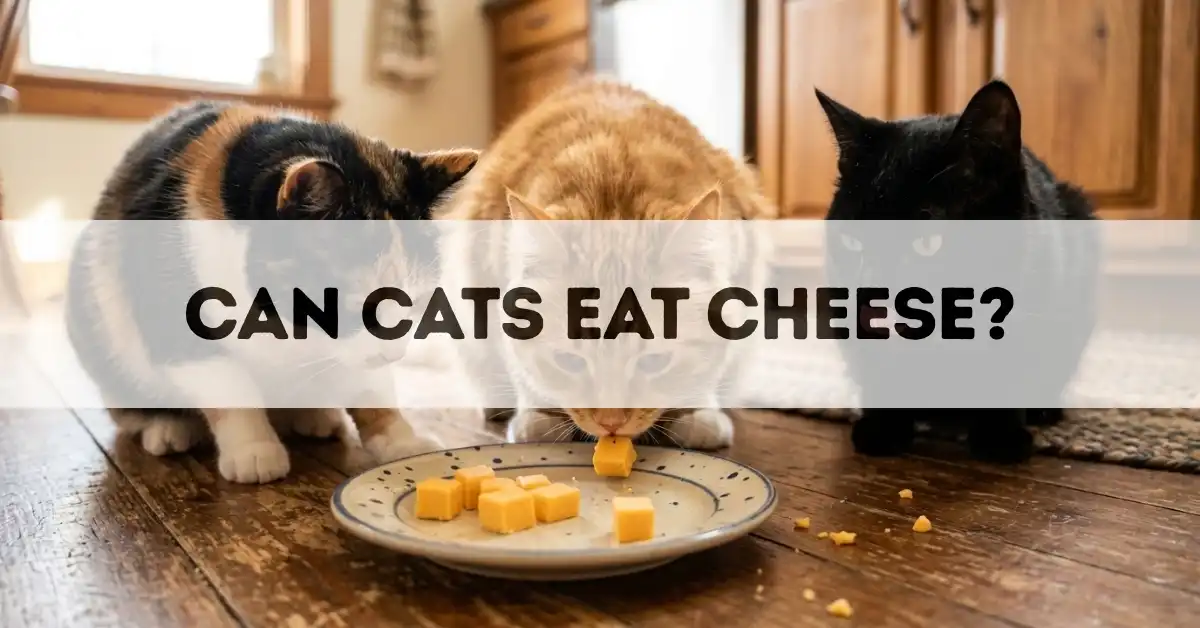
Cheese smells strong, tastes rich, and seems like the kind of food a curious cat would love. Many cats come running the second they hear a cheese wrapper, and many owners have wondered the same thing while making a sandwich:
Can cats eat cheese, or is it bad for them?
Here is the honest answer in simple words:
Cheese is not poisonous to cats, but it is also not a good “cat food.” A tiny bite of plain cheese is unlikely to harm many healthy adult cats, but a lot of cats cannot digest dairy well, and cheese is usually high in fat, salt, and calories. That means cheese can cause stomach trouble like diarrhea or vomiting, and it can also lead to weight gain over time.
This guide explains:
- When cheese is usually “okay” and when it is not
- Why cats often get diarrhea after cheese
- Which cheeses are less risky, and which to avoid
- How much is too much
- What signs mean you should call your vet
- Better treats to use instead
Quick Answer: Can Cats Eat Cheese?
Yes, cats can eat a tiny amount of plain cheese sometimes, but it is not recommended as a regular treat.
- Most adult cats are lactose intolerant, so cheese can cause gas, diarrhea, or vomiting.
- Cheese is high in fat and calories, which can lead to weight gain and stomach upset.
- Many cheeses are salty, which is risky for cats with kidney or heart problems.
- Some cheeses have unsafe ingredients like garlic, onion, or chives.
If your cat steals a small bite, do not panic. Just watch for stomach upset.
Why Do Cats Like Cheese So Much?
Even though cats do not need cheese, many cats act like it is the best thing ever. That usually happens because:
- Cheese is high in fat. Fat smells tasty to many animals, including cats.
- Cheese has a strong smell. Cats explore the world with their noses.
- Cheese often comes from your plate. Some cats learn that begging sometimes works.
- It is something new. Cats can be curious, and cheese has a different texture than their normal food.
Still, liking cheese does not mean it is good for a cat’s body.
The Biggest Problem: Lactose Intolerance in Cats
What is lactose?
Lactose is a sugar found in milk and many dairy foods.
What is lactose intolerance?
Lactose intolerance means the body does not make enough of an enzyme called lactase. Lactase helps break down lactose so it can be digested.
Are cats lactose intolerant?
Most adult cats are lactose intolerant to some degree. Kittens make more lactase while they are nursing. As they grow up, many cats naturally make less lactase. That makes dairy harder to digest.
What happens when a lactose-intolerant cat eats cheese?
If your cat cannot break down lactose, the lactose can sit in the gut and pull in extra water. Then gut bacteria feed on it, which can cause gas. This can lead to:
- Diarrhea
- Soft stool
- Gas
- Bloating
- Stomach cramps
- Vomiting (sometimes)
Symptoms can start in a few hours, or later the same day, depending on the cat and how much dairy was eaten.
Is cheese lower in lactose than milk?
Often, yes. Many aged cheeses have less lactose than milk because the lactose gets reduced during the cheese-making process.
But “lower lactose” does not mean “no lactose.” Some cats react to even small amounts.
Lactose Intolerance vs Dairy Allergy (A Simple Explanation)
People often say “my cat is allergic to dairy,” but there are two different issues:
Lactose intolerance (very common)
- Problem with milk sugar
- Often causes gas and diarrhea
- Usually shows up soon after eating dairy
Dairy allergy (less common, but possible)
- The immune system reacts to dairy protein
- Can cause vomiting or diarrhea, but may also cause:
- itchy skin
- ear irritation
- frequent scratching
- skin problems that keep coming back
If your cat has long-term skin or ear issues, do not assume it is cheese, but dairy can be one possible trigger. Your vet can help you figure that out safely.
Is Cheese Healthy for Cats?
Cheese is not a balanced food for cats. Cats are built to eat meat.
Cats need meat most of all
Cats are what vets call “obligate carnivores.” In simple words:
Cats need nutrients that come mainly from animal foods.
Cat food is made to give them what they need, including key nutrients like taurine. Cheese does not provide a complete nutrient mix for cats. It is more like a rich snack.
Main nutrition problems with cheese for cats
1) Cheese is high in fat
Fat is not always “bad,” but fatty treats can upset a cat’s stomach. Some cats handle it fine, but others vomit or get diarrhea.
For some cats, very fatty food can also raise the risk of pancreatitis, which is inflammation of an organ that helps digestion.
Pancreatitis can be serious and often needs a vet.
2) Cheese is high in calories
Cheese packs a lot of calories into a small bite.
If you give cheese often, your cat can gain weight even if the pieces seem tiny. Extra weight can lead to health problems like joint pain, diabetes, and heart strain.
A helpful rule used by many vets is:
- Treats should be no more than about 10 percent of a pet’s daily calories.
For many indoor cats, that limit is small. A few “little” bites of cheese can hit that limit quickly.
3) Cheese can be high in salt (sodium)
Many cheeses are salty. Too much salt is not good for cats, especially cats with:
- kidney disease
- heart disease
- high blood pressure
Healthy cats can still be affected by too much salty food, especially if it happens often.
4) Cheese may include unsafe added ingredients
Cheese itself is not toxic, but many cheese products contain things cats should not eat.
Big ones to watch for:
- Garlic, onion, chives, including powders, are dangerous for cats.
- Spicy peppers and heavy seasoning can irritate the stomach.
- Processed cheese products may have extra salt and additives.
This is why “a bite of cheese” is not always just cheese. It might be cheese plus seasonings, sauce, or other ingredients.
Is Cheese Toxic to Cats?
Plain cheese is not considered toxic to cats.
But cheese can still cause problems, and some cheese products can be dangerous because of what is mixed in.
If your cat eats a little plain cheddar, it is usually a “watch and wait” situation.
If your cat eats cheese with garlic, onion, chives, or heavy seasonings, it is safer to call your vet for advice.
What Happens If a Cat Eats Cheese? Common Reactions
Every cat is different. If your cat eats cheese, you might see one of these outcomes.
Best-case scenario
- Your cat acts normal.
- Stool stays normal.
- No vomiting.
Mild stomach upset (very common)
- Gas or extra-smelly gas
- Soft stool
- Diarrhea once or a few times
- Mild vomiting
More serious problems (less common, but important)
- vomiting more than once
- watery diarrhea that keeps going
- weakness or low energy
- signs of belly pain, like hunching, hiding, or growling when picked up
- refusal to eat
Cats can get dehydrated from vomiting and diarrhea, and dehydration can become dangerous faster than many people expect.
Which Cheeses Are Safer for Cats (If You Must Give Cheese)?
No cheese is “perfect” for cats. If you choose to give cheese, aim for:
- low lactose
- plain
- not salty
- given in a tiny amount
Here is a simple guide.
Usually less risky (still only tiny amounts)
These are often lower in lactose because they are aged and firmer.
- Cheddar (plain)
- Swiss (plain)
- Parmesan (plain), but it can be very salty, so use extreme caution
Even with “less risky” cheese, do not offer much, and do not offer it often.
Higher risk cheeses (more likely to upset stomach)
These are often softer, richer, and can be higher in lactose and fat.
- Mozzarella (especially fresh mozzarella)
- Cream cheese
- Brie
- Camembert
- Ricotta
- Cottage cheese (some cats tolerate it, many do not)
Cheeses to avoid
These are more likely to cause trouble, or they often come with unsafe ingredients.
- Blue cheese and very moldy, funky cheeses
- Any cheese with flavors, like garlic and herb, onion, chive, jalapeño, pepper, spicy blends
- Processed cheese (cheese slices, cheese spreads, cheese dips), which can be very salty and full of additives
Quick cheese safety table
| Cheese type | Why people offer it | Main problem | Best advice |
| Cheddar | Common and firm | Fat and calories | Tiny amount, rarely |
| Swiss | Often lower lactose | Fat and salt | Tiny amount, rarely |
| Parmesan | Strong taste | Very salty | Avoid, or use a dusting only |
| Mozzarella | “Seems mild” | Lactose, fat | Not ideal |
| Cream cheese | Easy to lick | Very fatty | Avoid |
| Flavored cheeses | Tasty to humans | Garlic and onion risk | Avoid |
| Processed cheese | Convenient | Salt and additives | Avoid |
Can Cats Eat Cheese Snacks Like Cheez-Its, Cheese Puffs, or Crackers?
These are not good for cats.
Cheesy snack foods are usually packed with:
- salt
- oils and fats
- seasonings and flavor powders
- starches and carbohydrates
Cats do not need crackers, chips, or cheese powder. These snacks can cause stomach upset and weight gain.
If your cat licks a crumb once, it is usually not an emergency. But do not make it a habit.
Can Cats Eat Mac and Cheese?
Mac and cheese is usually a bad idea for cats. It combines several things that can upset a cat’s stomach:
- dairy (lactose)
- butter or cream (fat)
- pasta (carbs cats do not need)
- salt and seasoning
Even a small serving can cause diarrhea in some cats.
Can Cats Eat Pizza Cheese?
Plain mozzarella is not toxic, but pizza is more than cheese. Pizza may include:
- garlic or onion in sauce
- spices
- salty toppings
- fatty meats
If your cat steals a small strand of plain cheese from pizza, watch for stomach upset. If your cat licks sauce or eats toppings, be more cautious and consider calling your vet, especially if garlic or onion is involved.
How Much Cheese Can a Cat Eat?
If you decide to give cheese, think “tiny.”
A simple portion rule
- Pea-sized or smaller is enough for most cats.
That is not a cube. It is a small nibble.
How often is okay?
- Not daily.
- Think of cheese like a rare treat, such as once in a while, not part of a routine.
If your cat starts expecting cheese every day, it is easy to overdo it without realizing.
Why small amounts matter
Cheese is dense. A small bite contains a lot of fat and calories for a small animal.
A good way to think about it is this:
- A bite that feels “tiny” to you can be big for a cat’s stomach.
How to Safely Test if Your Cat Tolerates Cheese (If You Really Want to)
Some cats can handle a tiny amount of cheese, and some cannot. If you want to test it safely, do it like this:
- Only test with a healthy adult cat.
Do not test with kittens, senior cats with medical issues, or cats with digestive problems. - Pick the simplest cheese.
Use plain, hard cheese like cheddar. No seasoning. No flavored cheese. - Offer a very small piece.
Smaller than a pea is enough. - Do not offer other new foods that day.
This helps you know what caused any stomach trouble. - Watch for 24 hours.
Check stool, appetite, energy, and vomiting. - If there is diarrhea or vomiting, stop dairy.
Many cats do better when dairy is avoided completely.
If your cat has any ongoing stomach problems, do not test at home. Talk to your vet first.
When Cats Should NOT Eat Cheese
Cheese is not a good idea for many cats. Avoid it if your cat is:
- A kitten
- Known lactose intolerant, meaning dairy has caused diarrhea before
- Overweight, because cheese adds calories fast
- Prone to pancreatitis, or has had pancreatitis before
- Diagnosed with kidney disease
- Diagnosed with heart disease
- On a special vet diet, such as renal, urinary, gastrointestinal, or allergy diets
- A cat with a sensitive stomach that gets diarrhea easily
If your cat has a medical condition and you are not sure, it is safest to skip cheese.
Signs Your Cat Does Not Tolerate Cheese
Common signs include:
- diarrhea or soft stool
- gas and bloating
- vomiting
- stomach noises
- less appetite
- low energy
Some cats also act uncomfortable. They may hide, hunch their back, or refuse to be touched around the belly.
When to Call a Vet
It is safer to call your vet if:
- your cat vomits more than once
- diarrhea is watery, keeps happening, or has blood
- your cat is weak, very sleepy, or seems in pain
- your cat will not eat for 24 hours (or 12 hours for kittens)
- you think your cat is dehydrated (dry gums, very tired, not drinking)
- the cheese had garlic, onion, or chives, including powders
- your cat has kidney disease, heart disease, diabetes, or a history of pancreatitis
If you are worried, call. Vets would rather you call early than wait until your cat is much sicker.
What to Do at Home If Your Cat Ate Cheese and Has Mild Diarrhea
If symptoms are mild and your cat is still alert, drinking, and willing to eat:
- Stop giving cheese and all treats.
Do not “try again” to see if it was the cheese. - Go back to normal cat food only.
Stick with your cat’s regular diet. - Make sure fresh water is available.
Diarrhea can cause dehydration. - Watch the litter box and behavior closely for 24 hours.
Symptoms should improve.
Do not give human medicines unless your vet tells you to. Some human medicines are dangerous for cats.
If symptoms do not improve within a day, or they get worse, contact your vet.
What If My Cat Ate a Lot of Cheese?
A cat can sometimes get into a cheese plate, the trash, or a sandwich left on the counter. If your cat ate a lot, do this:
Step 1: Remove access
Put the food away and block the area. Cats can go back for seconds.
Step 2: Check what kind of cheese it was
Ask these questions:
- Was it flavored with garlic, onion, or chives?
- Was it a very salty cheese?
- Was it a rich, creamy cheese?
- Was it mixed into something like pizza, dip, or sauce?
Step 3: Watch for vomiting, diarrhea, and pain
Monitor for the next 24 hours.
Step 4: Offer water
Keep water available. Watch for dehydration.
Step 5: Call your vet if needed
Call if:
- your cat ate a large amount
- the cheese had risky ingredients
- your cat has any medical condition
- symptoms start, especially repeated vomiting or watery diarrhea
Even when cheese is not toxic, a large amount can cause a painful stomach episode, and dehydration can become a big problem.
Cheese and Pancreatitis: Why Vets Warn About Fatty Foods
Pancreatitis means inflammation of the pancreas. The pancreas helps with digestion.
Not every cat that eats cheese will get pancreatitis. But fatty foods can be a trigger in some cats.
Watch for signs like:
- vomiting
- not eating
- belly pain
- hiding and acting “not themselves”
- very low energy
If you see these signs after a fatty food like cheese, contact your vet quickly.
Can Cheese Ever Be Useful for Cats?
Sometimes owners use cheese for a reason, not as a treat.
1) Hiding pills in cheese
Some cats will eat a pill if it is hidden in food. Cheese can work, but it is not the best choice for lactose-intolerant cats.
If you use cheese to hide a pill:
- use a tiny amount
- make sure the pill is fully covered
- watch to be sure your cat swallows it and does not spit it out later
- ask your vet if the medicine can be given with food
Important note: Some pills taste bitter. If a cat tastes a bitter pill, they may drool or foam. That does not always mean allergy, but it is a sign the pill did not go down smoothly.
Better options:
- cat pill pockets
- hiding medicine in a small spoon of wet cat food
- asking the vet about liquid medicine or flavored versions
- a pill giver tool, if your vet shows you how
2) Getting a picky cat to eat (only in rare situations)
If a cat refuses food, some owners try cheese to tempt them. This can backfire because rich food can worsen nausea or stomach upset.
If your cat is not eating, it is better to talk to a vet instead of relying on cheese. Not eating can become serious for cats.
Better Treats Than Cheese (Cat-Friendly Options)
If you want to give treats, you can choose foods that match what cats are built to eat.
Good options include:
- Freeze-dried meat treats (single ingredient, like chicken or salmon)
- Tiny pieces of cooked plain meat (boiled chicken or turkey, no salt, no seasoning)
- Commercial cat treats made for cats
- A teaspoon of wet cat food as a special “treat”
These options are usually easier on the stomach and better for a cat’s nutrition.
Frequently Asked Questions About Cats and Cheese
Can cats eat cheddar cheese?
A tiny piece of plain cheddar is often tolerated better than milk because it is usually lower in lactose. Still, some cats get diarrhea. Offer only a very small amount and only rarely.
Can cats eat mozzarella cheese?
Mozzarella is not toxic, but it is often softer and can have more lactose than aged cheese. Many cats do not tolerate it well. It is not a great choice.
Can cats eat parmesan cheese?
Parmesan is aged and may be lower in lactose, but it is often very salty. Too much salt is not good for cats. If you offer it, use an extremely tiny amount, like a small pinch, not a sprinkle like you would use on pasta.
Can cats eat cream cheese?
Cream cheese is very high in fat and can upset a cat’s stomach fast. It is best to avoid it.
Can cats eat cottage cheese or ricotta?
These are dairy-heavy and can still contain enough lactose to cause diarrhea. Some cats tolerate small amounts, but many do not. In general, they are not recommended.
Can cats drink milk if they can eat cheese?
Not always. Milk usually has more lactose than many cheeses. A cat that handles a tiny bite of cheddar might still get diarrhea from milk.
Can cats eat lactose-free cheese?
Lactose-free cheese may be easier on the stomach for some cats. But it can still be high in fat, salt, and calories, so it is still not a healthy regular treat.
Can cats eat cheese every day?
No, it is not a good daily treat. Daily cheese can lead to weight gain and can cause ongoing stomach trouble. If your cat loves treats, use cat treats or meat-based treats instead.
Can kittens eat cheese?
It is best not to give cheese to kittens. Kittens have sensitive digestion and need balanced kitten food to grow properly. Diarrhea can also dehydrate kittens more quickly, which can become serious.
My cat ate cheese and now has diarrhea, what should I do?
Stop all dairy and treats, offer normal cat food and water, and watch closely. If diarrhea is watery, keeps happening, has blood, or lasts longer than 24 hours, call your vet.
Why does my cat throw up after eating cheese?
The most common reasons are lactose intolerance and the high fat content. Some cats also have sensitive stomachs, and rich foods trigger vomiting. If vomiting happens more than once, or your cat seems weak or in pain, contact a vet.
Can cats eat grilled cheese?
Grilled cheese is not a good idea. It includes butter, oil, bread, and often a lot of cheese. It is very fatty and salty for a cat, and it can upset the stomach.
Can cats eat cheese with crackers?
No. Crackers are salty and starchy. Cats do not need them, and they can cause stomach upset and unnecessary weight gain.
My cat stole a bite of pizza, what should I do?
If it was a tiny bite, monitor your cat. Check whether the pizza had garlic or onion powder in the sauce or seasoning. If your cat ate sauce, toppings, or more than a tiny amount, or if symptoms start, call your vet for advice.
Final Verdict: Should You Give Your Cat Cheese?
Cats can eat cheese in very small amounts, but it is not recommended as a regular treat.
If your cat is healthy and you really want to share:
- Choose plain hard cheese
- Offer less than a pea-sized piece
- Give it rarely, not daily
- Stop if you notice diarrhea, gas, or vomiting
If your cat is overweight, has kidney or heart disease, has a sensitive stomach, or has had pancreatitis:
- Skip the cheese
- Choose a cat-friendly treat instead, like freeze-dried meat treats or tiny pieces of plain cooked chicken
If your cat steals a small bite of plain cheese, you usually do not need to panic. Just watch the litter box and your cat’s behavior for the next day.