











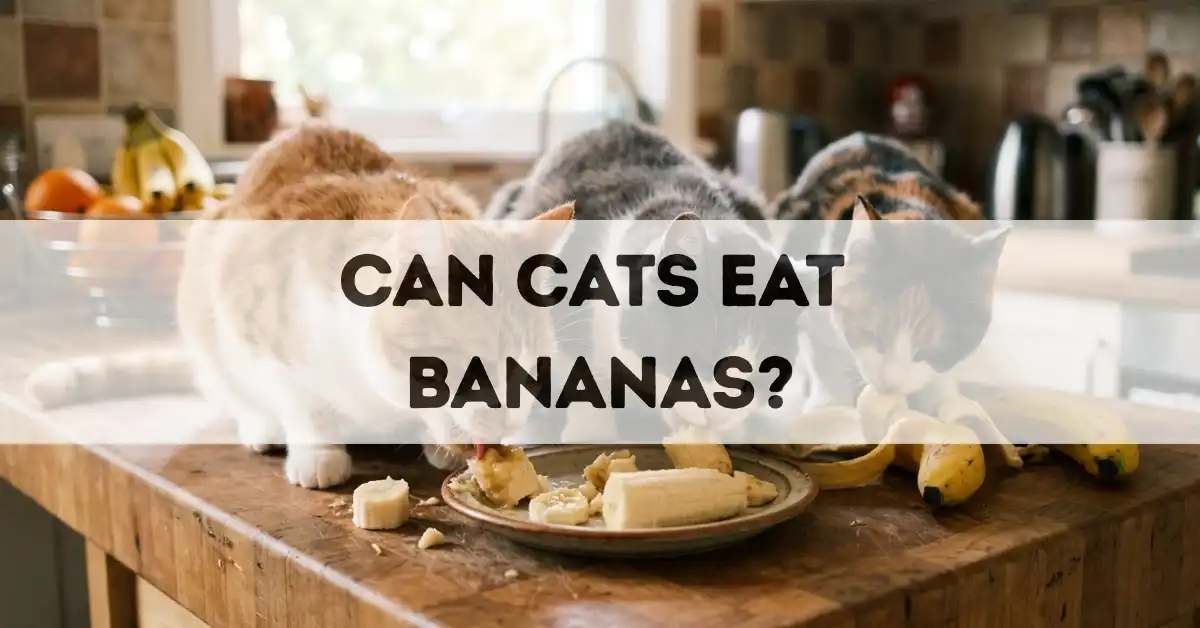
If you have ever peeled a banana and noticed your cat sniffing the air, pawing at the table, or trying to steal a bite, you are not alone. Cats are curious. They like new smells, new textures, and anything that seems important to you. That is why many cat owners end up asking the same question.
Quick Answer: Can Cats Eat Bananas?
Yes, most cats can eat a tiny amount of plain banana. Banana is not toxic to cats.
But banana is also not needed for a healthy cat, and it should be an occasional treat only, not a daily snack. Never feed banana peel, and avoid banana for cats with certain health problems unless your veterinarian says it is okay.
This guide explains everything you need to know in simple, practical steps. You will learn what is safe, what is risky, how much is too much, how to serve banana the right way, and when to call the vet.
Are Bananas Safe for Cats or Toxic?
Bananas are not toxic to cats. Plain banana flesh, the soft part you eat, is generally safe for most healthy cats when offered in very small amounts.
Still, “not toxic” does not mean “good to feed often.” Some human foods are not poisonous, but they can still cause problems like stomach upset, weight gain, or diarrhea. Banana fits into that category for cats. It is usually safe in a tiny taste, but it is not a food cats truly need.
Why Can Cats Eat Bananas, but They Do Not Need Them
Cats are built to eat meat
Cats are obligate carnivores. That is a fancy phrase with a simple meaning: cats are built to eat meat to stay healthy. Their bodies are designed to get their most important nutrients from animal foods, not from plants or fruit.
A good cat diet gives them things like:
- Taurine (an essential nutrient found in animal foods, not in bananas)
- High-quality animal protein
- The right balance of fat
- Vitamins and minerals in the amounts cats need
Bananas are mostly carbs and sugar
Bananas are mostly:
- Water
- Starch (a type of carbohydrate)
- Natural sugars
- Fiber
- Small amounts of vitamins and minerals
Humans can use fruit as part of a balanced diet. Cats do not need fruit for balance. For cats, banana is mainly extra calories, extra sugar, and a new taste. That is why banana should stay in the “tiny treat” category.
Why Some Cats Like Banana (and Others Do Not)
Cats do not taste sweetness the same way people do. So if your cat likes banana, it is usually not because it tastes “sweet” to them like it does to you.
Cats may like banana because of:
- Smell: ripe bananas have a strong smell that can be interesting
- Texture: soft and easy to lick
- Curiosity: your cat wants what you have
- Routine: your cat learned that banana time means attention
And many cats simply do not care at all. That is normal too. Never force your cat to try banana.
Potential Benefits of Banana for Cats (Small and Situational)
Banana is not a health food for cats, but a tiny amount can have a few small possible benefits. These benefits are limited and they do not replace proper veterinary care.
1) Fiber may help mild constipation in some cats
Bananas contain fiber. Fiber can help some cats with mild constipation by supporting normal stool movement.
Important note: constipation in cats is not always a small problem. It can be painful and sometimes serious. If your cat is straining, crying in the litter box, vomiting, or not producing stool, do not try to fix it with banana. Call your veterinarian.
Also, fiber does not help every cat the same way. In some cats, banana can make stool firmer, especially if the cat is not drinking enough water.
2) Potassium is in bananas, but cats usually get enough already
Bananas are known for potassium. Potassium supports muscles and nerves. But most cats eating a complete and balanced cat food already get enough potassium. Banana is not a needed potassium source for cats.
3) Enrichment and variety
For some cats, a tiny piece of banana is a safe way to add variety. A new smell or texture can be a small form of enrichment. Think of it like giving your cat a new toy to explore, except it is a food item.
Risks of Feeding Banana to Cats
Even though bananas are non-toxic, there are real reasons to be cautious.
1) Extra sugar and extra calories
Banana contains natural sugar. Cats do not need sugar. Frequent sugary snacks can lead to:
- Weight gain
- A harder time managing diabetes
- Less room in the diet for healthy, meat-based calories
Cats are small. That means their daily calorie “budget” is small too. A few bites here and there can add up faster than people expect.
2) Stomach upset
Some cats handle banana fine. Others get stomach upset, especially if they are sensitive or if the serving is too big.
Signs of stomach upset can include:
- Vomiting
- Diarrhea or soft stool
- Gas
- Drooling (often a sign of nausea)
3) Constipation could get worse in some cats
It sounds strange, but it can happen. Banana might help some cats, but it can make stool firmer in others, especially if the cat is not well hydrated.
4) Choking risk if pieces are too large
Banana is soft, but cats can gulp. A large chunk can be a choking hazard. This is one of the main reasons to keep pieces tiny.
5) Dental concerns
Banana is sticky and sugary. Sticky foods can cling to teeth. Cats can get dental disease, and sugary treats do not help. Banana is not the worst thing ever for teeth, but it is not a “tooth-friendly” snack either.
6) Allergic reactions or intolerance (rare)
True banana allergy in cats is uncommon, but any food can cause a reaction in an individual cat.
Watch for:
- Itching, facial rubbing, or unusual scratching
- Vomiting or diarrhea soon after eating
- Swelling of the face (rare but serious)
If you ever see swelling, trouble breathing, or collapse, treat it as an emergency and seek veterinary care immediately.
How Much Banana Can Cats Eat? (Safe Serving Size)
Banana should be a treat, not part of your cat’s daily diet.
A conservative, cat-safe guideline for most healthy adult cats is:
- Start with a crumb-sized taste
- Then offer 1 to 2 pea-sized pieces if your cat tolerates it
- Offer banana no more than once or twice a week, and less is even better
What “pea-sized” looks like in real life
A pea-sized piece is tiny. It is about:
- the size of a pea, or
- about what fits on the tip of your pinky nail
That small size matters because it lowers choking risk and reduces stomach upset.
Portion guidance by cat size (approximate)
- Small cat (under about 8 lb or 3.5 kg): 1 pea-sized piece
- Average cat (8 to 12 lb or 3.5 to 5.5 kg): 1 to 2 pea-sized pieces
- Large cat (over about 12 lb or 5.5 kg): 2 to 3 pea-sized pieces, still only occasionally
Treat rule that keeps cats healthy
Many veterinarians suggest treats should be less than 10 percent of your cat’s daily calories. For cats that gain weight easily, even less is better.
If you already give treats daily, try to keep it to one treat type per day, not many different snacks. Little extras add up fast.
Can Kittens Eat Bananas?
A tiny taste of banana is not toxic for kittens, but it is usually best to avoid it.
Kittens:
- have more sensitive stomachs
- need very specific nutrition for growth
- can get diarrhea more easily from “extra” foods
If you really want to offer a kitten banana, ask your vet first, and keep it extremely small, like a tiny smear.
How to Safely Feed Banana to Your Cat (Step by Step)
If your cat seems interested and you want to offer a safe taste, do it in a careful, simple way.
Step 1: Choose plain, ripe banana
Ripe banana is soft and easy to mash. Unripe banana can be harder to digest.
Step 2: Peel it fully
Only offer the soft banana flesh.
Step 3: Cut a very tiny piece
Start smaller than you think. A crumb-sized piece is perfect for a first try.
Step 4: Serve it plain
Do not add:
- sugar
- honey
- syrup
- chocolate
- cinnamon
- peanut butter
- whipped cream
- ice cream
Plain is safest.
Step 5: Offer it as a treat, not a meal
Do not replace your cat’s normal food with banana. Balanced cat food should stay the main diet.
Step 6: Watch your cat for the next 24 hours
Check for vomiting, diarrhea, appetite changes, and normal litter box habits.
Easy serving ideas
- A tiny cube offered by hand
- A small smear on a lick mat
- A tiny mash mixed into a spoonful of wet food, only if your cat already tolerates banana
Can Cats Eat Banana Peel?
No, do not feed banana peel to cats.
Banana peel is not a good cat food for several reasons:
- It is tough and hard to digest
- It can be a choking hazard
- It can cause stomach irritation
- It can increase the risk of a blockage
- It may have pesticide residue or dirt on it
What if my cat chewed the peel?
If your cat only licked or chewed it a little, remove it and watch them.
What if my cat swallowed peel?
Call your veterinarian if you notice:
- repeated vomiting
- refusing food
- lethargy
- belly pain
- straining to poop or no poop
- a swollen belly
Banana flesh usually causes mild stomach upset at worst, but peel is more likely to cause a problem.
Can Cats Eat Dried Bananas or Banana Chips?
Not recommended.
Dried bananas and banana chips are usually a poor choice because they are:
- much higher in sugar per bite (water is removed, sugar becomes concentrated)
- sometimes fried in oil
- sometimes coated with added sugar, sweeteners, or preservatives
Even if the ingredients look simple, the sugar concentration is still high. If your cat gets a crumb by accident, it is usually not an emergency, but it is not a good treat choice.
Can Cats Eat Frozen Banana?
Plain frozen banana is not toxic, but it is usually not a good idea for cats.
Problems with frozen banana:
- it can be too hard and become a choking risk
- it can be too cold for some cats and cause discomfort
If you want to offer it, let it thaw until soft, then give a tiny piece.
Can Cats Eat Green (Unripe) Banana?
It is better to avoid unripe banana.
Unripe banana tends to have:
- more starch
- a firmer texture
That can be harder for a cat to digest and may increase stomach upset.
Can Cats Eat Banana Bread, Banana Muffins, or Banana Pancakes?
No, these are not safe or healthy choices for cats.
Even when banana itself is not toxic, baked banana foods often contain ingredients that are not good for cats, such as:
- sugar
- butter or oils (too fatty)
- milk (many cats are lactose intolerant)
- salt
- chocolate chips (toxic to cats)
- raisins (dangerous for pets and best avoided completely)
- nuts (high fat and can be a choking hazard)
- flavorings and additives
Also, some baked goods can contain sweeteners that are risky for pets. Avoid sharing baked banana foods.
Can Cats Eat Bananas with Peanut Butter?
It is best to avoid banana with peanut butter for cats.
Here is why:
- Peanut butter is very high in fat, which can upset a cat’s stomach.
- Some brands contain added sugar or extra salt.
- Sticky peanut butter can be a choking risk, especially if a cat gulps.
- Some products may contain sweeteners. It is safest to avoid them completely in pet food.
If you want to share banana, share a tiny bit of plain banana only.
Can Cats Eat Banana Yogurt or Banana-Flavored Foods?
Usually, no, or at least not recommended.
Problems with banana yogurt and banana-flavored foods:
- Yogurt contains lactose. Many cats cannot digest lactose well.
- Flavored products often contain added sugar.
- “Banana flavor” is often artificial, with extra ingredients you do not need.
If you want to offer banana, offer a tiny piece of plain banana.
Can Cats Eat Banana Baby Food?
Many people keep baby food at home and wonder if it is safe to share. Banana baby food is common, but it is not the best choice for cats.
Reasons to be cautious:
- It may include added sugar or mixed fruits.
- It may contain lemon juice or other ingredients that can upset a cat’s stomach.
- It is easy to accidentally give too much.
If your cat is sick or not eating, do not rely on banana baby food. Call your veterinarian for advice. For a healthy cat that just wants a taste, plain banana is a better option than processed baby food, but keep it tiny.
Can Cats Eat Bananas Every Day?
No, it is not recommended.
Even though banana is not toxic, daily banana can lead to:
- too many extra calories
- too much sugar
- more stomach upset over time
If your cat loves banana and tolerates it, keep it as a “sometimes treat,” not an everyday habit.
When Should Cats NOT Eat Banana?
Even a small treat is not right for every cat. Avoid banana, or ask your vet first, if your cat has any of these issues.
1) Diabetes or blood sugar problems
Banana contains sugar. Cats with diabetes often need careful diet control. Even small sugary treats can interfere with management.
2) Obesity or easy weight gain
If your cat needs to lose weight, treats should be limited. In many cases, it is better to skip banana and use a lower-calorie option, or use a portion of regular wet food as a “treat.”
3) Chronic stomach or bowel problems
Cats with IBD, chronic diarrhea, frequent vomiting, or food sensitivities may not handle fruit well. Banana can make symptoms worse.
4) Kidney disease or special dietary restrictions
Some cats with kidney disease have special diet rules. Do not add extra foods, even “healthy” ones, without your veterinarian’s approval.
5) History of constipation, megacolon, or bowel motility problems
Fiber can help some cats and harm others. If your cat has a history of constipation, ask your veterinarian before trying banana as a fiber source.
6) Food allergies or very sensitive stomach
If your cat reacts to new foods easily, it is safer to avoid banana.
Signs Your Cat Ate Banana and Is Not Tolerating It
After your cat tries banana, watch for these signs:
- Vomiting
- Diarrhea or soft stool
- Drooling (often nausea)
- Loss of appetite
- Hiding more than usual
- Lethargy (low energy)
- Belly discomfort, such as a hunched posture or growling when touched
If signs are mild and go away quickly, just avoid banana in the future.
Emergency signs (call a vet right away)
- trouble breathing
- swelling of the face or lips
- repeated vomiting
- severe lethargy or collapse
- a painful, swollen belly
- your cat cannot keep water down
These signs are not common from banana, but they are important to know.
What Happens If a Cat Eats Too Much Banana?
If your cat steals a big bite of banana, the most common outcome is stomach upset.
A simple timeline of what you might see
- Within a few hours: drooling, nausea, maybe vomiting
- Within 6 to 24 hours: soft stool or diarrhea
- Over the next day: your cat may return to normal if the amount was not huge
Every cat is different. A tiny cat that eats a big amount can have a harder time than a large adult cat that stole a small bite.
What you can do at home (mild cases only)
- Take the banana away so your cat cannot keep eating it.
- Offer fresh water.
- Feed normal meals if your cat is acting normal and not vomiting.
- Monitor litter box habits and energy for 24 hours.
Call your veterinarian promptly if:
- your cat ate banana peel
- your cat is vomiting repeatedly
- diarrhea is watery, severe, or has blood
- your cat seems painful, bloated, or very tired
- your cat is straining to poop or cannot poop
- your cat is a kitten and ate a large amount
- your cat has diabetes, kidney disease, or another medical condition
Banana flesh rarely causes a blockage, but peel can be risky.
Banana and Cat Nutrition: Does Banana Provide Anything Your Cat Needs?
Bananas do contain some vitamins and minerals, but they do not provide what cats need most.
A cat’s most important nutrients include:
- Taurine (essential for heart, eyes, and overall health)
- Animal-based protein
- The right balance of fats and amino acids
Bananas do not contain taurine, and they do not offer the animal nutrients cats are built to use best. If your cat eats a complete and balanced cat food, they already get the vitamins and minerals they need. So banana does not “fill a gap.” It mostly adds sugar and calories.
Is Banana a Good Treat Compared to Other Treats?
Banana can be “okay” for some cats in tiny amounts, but it is not the best treat choice.
Pros of banana as a treat
- non-toxic
- soft texture
- easy to cut into tiny pieces
Cons of banana as a treat
- sugary and starchy
- not species-appropriate as a regular snack
- can cause vomiting or diarrhea
- adds calories quickly
Often better treat options for cats
If your goal is a more natural, meat-based treat, many cats do better with:
- small pieces of plain cooked chicken or turkey (no salt, no seasoning, no onion, no garlic)
- freeze-dried single-ingredient meat treats
- a spoonful of their regular wet food as a “special treat”
If your cat truly loves banana and handles it well, you can still offer a tiny bite occasionally. Just keep it rare.
A Simple Banana Treat Decision Guide
Use this quick guide to decide if banana is a good idea today.
Banana may be okay if:
- your cat is a healthy adult
- your cat is at a healthy weight
- your cat has no ongoing stomach problems
- you offer a pea-sized portion
- you feed it plain and only once in a while
Skip banana and choose something else if:
- your cat is overweight or on a weight-loss plan
- your cat has diabetes
- your cat has kidney disease
- your cat vomits often or has chronic diarrhea
- your cat has a history of constipation problems
- your cat is a kitten with a sensitive stomach
When in doubt, ask your veterinarian. It is always safer to check first for cats with medical conditions.
Frequently Asked Questions (FAQ)
Can cats eat bananas safely?
Yes, most cats can eat a tiny amount of plain banana safely. It is not toxic, but it should only be an occasional treat.
How much banana can cats eat?
Start with a crumb-sized taste. If your cat does fine, offer 1 to 2 pea-sized pieces once or twice a week at most.
Can cats eat banana peel?
No. Banana peel is hard to digest and can be a choking hazard or cause a blockage.
Can kittens eat bananas?
It is best to avoid banana for kittens. Their stomachs are more sensitive, and they need very specific nutrition for growth.
Can cats eat banana chips?
Not recommended. Banana chips and dried banana are concentrated in sugar and may be fried or have added ingredients.
Can cats eat banana bread?
No. Banana bread and other baked banana foods usually contain sugar, fat, and other ingredients that are unhealthy or unsafe for cats.
Can cats eat bananas for constipation?
A tiny amount may help mild constipation in some cats because of fiber, but constipation can be serious. If your cat is straining, in pain, vomiting, or not pooping, call a veterinarian instead of using banana as a home remedy.
Can cats eat bananas with peanut butter?
It is best to avoid it. Peanut butter is very fatty and sticky, and some brands contain added sugar or salt.
My cat ate a lot of banana, what should I do?
Remove access to more banana, offer water, and monitor for vomiting or diarrhea. Call your vet if your cat ate peel, vomits repeatedly, has severe diarrhea, acts very tired, or has belly pain.
Bottom Line: Can Cats Eat Bananas?
Yes, cats can eat bananas in very small amounts, but only as an occasional treat. Banana is not toxic, but it is sugary, not needed, and can upset some cats’ stomachs. For most healthy cats, a tiny piece once in a while is the safest approach.
Quick safety checklist
- Offer banana flesh only
- Never feed banana peel
- Keep pieces tiny, like pea-sized
- Keep it rare, not daily
- Avoid banana if your cat has diabetes, obesity, kidney disease, or chronic stomach issues, unless your veterinarian says it is okay
- Watch for vomiting, diarrhea, drooling, or appetite changes after trying it
If you tell me your cat’s age, weight, and any health issues, I can help you choose a safer treat plan and a banana portion that fits your cat.