









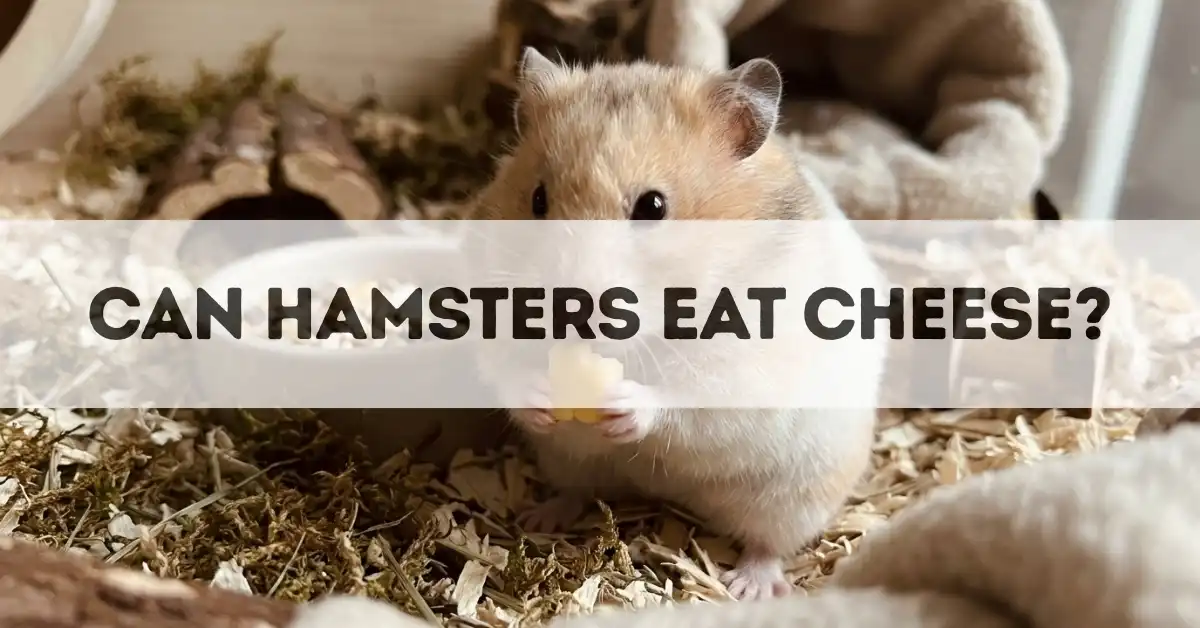
If you have ever watched your hamster nibble seeds and veggies and thought, “Can hamsters eat cheese?” you are not alone. Cheese is a common snack in many homes, and it smells interesting to pets. It is normal to wonder if a tiny bite is safe.
Here is the honest, safe answer: Yes, hamsters can eat cheese in very small amounts, but it is not needed, and it is not a great treat for every hamster. Some hamsters handle a tiny crumb with no problem, and others get tummy trouble. Cheese is also rich and easy to overfeed.
This guide explains everything in a simple way: which cheeses are safer, which ones to avoid, how much is too much, how often is too often, how to feed it safely, and what warning signs to watch for.
Quick Safety Rules (Read This First)
Can hamsters eat cheese? Yes, but only as a rare treat.
Use these rules to keep it as safe as possible:
- Best choice: plain, hard cheese, unflavored.
- Avoid: processed cheese, soft cheese, flavored cheese, and blue cheese.
- Portion size:
- Syrian hamster: a crumb up to a small pea size, smaller is better.
- Dwarf hamster: a tiny crumb, about half of that, often less.
- How often: once every 1 to 2 weeks at most, and many owners choose once a month or never.
- Do not put cheese in the cage and walk away. Hamsters may stash it.
- Always watch for diarrhea or a wet tail area. Digestive problems can become serious fast.
If your hamster is overweight, has had diarrhea before, is very young, or is stressed and newly adopted, it is usually best to skip cheese completely.
Understanding a Hamster’s Diet (Where Cheese Fits)
Hamsters are omnivores. That means they can eat both plant foods and some animal foods. In the wild, hamsters may eat:
- seeds and grains
- plants and grasses
- roots and some fruits
- insects and other small protein sources
A healthy pet hamster diet should mostly be:
- A high-quality hamster pellet or lab block, plus a good seed mix if you use one
- Fresh vegetables in small amounts for vitamins and minerals
- Occasional protein treats, like a tiny piece of cooked egg or mealworms
- Treats in moderation, meaning very small and not too often
Cheese does not belong in the “main diet” group. It fits only in the “treat” group, and even there it is optional.
Your hamster does not need cheese to be healthy. There are many other treats that are easier to digest and safer to feed.
So, Can Hamsters Eat Cheese?
Yes, but only a tiny amount, and only sometimes
Cheese is not a poison for hamsters. A small bite usually will not harm a healthy hamster. The problem is that cheese can cause issues if:
- the hamster cannot digest dairy well
- the portion is too large
- it is offered too often
- the cheese is salty or flavored
- the hamster hides it in bedding and it spoils
So the safest way to think about cheese is this:
Cheese is a “sometimes” treat, not a “normal snack.”
Why Cheese Can Be Risky for Hamsters
Cheese might look harmless, but hamsters are tiny. Foods that are “fine” for humans can be too rich for them.
1) Lactose can upset the stomach
Cheese comes from milk. Milk has lactose, which is a natural sugar. Many animals have trouble digesting lactose, especially as they grow up. Some hamsters can handle a little, and some cannot.
If lactose bothers your hamster, you might see:
- soft poop or diarrhea
- a wet or dirty bottom
- gas, bloating, or tummy discomfort
- less appetite
- dehydration
Diarrhea in hamsters is always serious, because they can get dehydrated quickly.
2) Cheese is high in fat and calories
Cheese has a lot of fat and calories packed into a small space. A piece that looks “tiny” to you might be a big, rich meal for your hamster.
Too much fatty food can lead to:
- weight gain
- less energy and less running
- health problems over time
Even if your hamster stays active, extra calories add up fast.
3) Many cheeses are high in salt
Salt is also called sodium. Hamsters do not need salty foods. Some cheeses, especially processed cheese and many aged cheeses, can have a lot of salt.
A tiny taste once in a while is usually not an emergency, but regular salty treats are not healthy for a small animal.
4) Hamsters stash food, and cheese can spoil
Hamsters love to hide food in their nest or bedding. This is natural. It is also a big problem with cheese.
Cheese can go bad, grow mold, or attract bacteria. If your hamster stashes cheese and eats it later, it can cause stomach upset.
That is why hand-feeding and stash checks matter so much with cheese.
Are There Any Benefits to Cheese for Hamsters?
Cheese is not needed, but people offer it because:
- it has protein
- it tastes good to many hamsters
- it can work as a “special reward”
Still, there are usually better protein treats that are easier on the stomach and less risky to stash. We will cover those later.
What Cheese Can Hamsters Eat? (Safer Options)
If you decide to offer cheese, pick something that is:
- plain (no spices, no herbs, no onion, no garlic)
- hard or aged (usually less lactose than very soft cheese)
- low moisture (less likely to spoil fast)
- lower salt if possible
Safer choices (still only in tiny amounts)
These are not “healthy foods,” but they are usually safer than soft or processed cheeses:
- mild cheddar (plain, small crumb)
- Swiss (plain, small piece)
- a tiny crumb of a plain hard cheese similar to cheddar
Why hard cheese can be safer: Hard and aged cheeses often have less lactose than fresh cheeses. Also, hard cheese is less wet, so it is less likely to turn slimy quickly if a small bit is hidden. It can still spoil, but it tends to spoil slower than soft cheese.
A note about lactose-free cheese
You might see cheese labeled “lactose-free.” This can lower the lactose problem, but it does not fix everything.
Lactose-free cheese can still be:
- high in fat
- high in salt
- full of extra ingredients depending on the brand
So even lactose-free cheese should follow the same rules: tiny portion, very rare treat.
What Cheese Should Hamsters Avoid? (Not Recommended)
To be safe, avoid these cheeses and cheese products:
1) Processed cheese and cheese spreads
Examples:
- American cheese slices
- cheese spread in a tub
- “nacho cheese” style dips
These often contain extra salt, preservatives, and additives. They are not a good choice for hamsters.
2) Soft or fresh cheeses
Examples:
- cream cheese
- brie
- ricotta
- cottage cheese
- fresh mozzarella
These have more moisture and can spoil faster. They are also easy to smear, which can make a mess in fur and bedding.
3) Blue cheese and mold-ripened cheeses
Blue cheese is made with mold as part of the process. This is not a safe risk for hamsters. Avoid it.
4) Flavored cheeses
Avoid anything with added flavors like:
- garlic and herb
- onion
- chili or spicy flavors
- pepper
- “smoked flavor” or strong seasonings
Onion and garlic are not safe for hamsters, and spicy seasonings can irritate the stomach.
5) Cheese snacks and “cheese flavored” junk food
Examples:
- cheese puffs
- crackers with cheese powder
- chips with cheese flavoring
These are not real cheese in a simple form. They are usually salty and oily, and they have many ingredients.
6) Common snack cheeses to be careful with
People often ask about these:
- String cheese: Usually mozzarella, which is soft and higher moisture. Not a great choice.
- Babybel cheese: It depends on type, but it is still a rich cheese. If offered at all, it should only be a tiny piece, not the whole mini cheese.
How Much Cheese Can a Hamster Eat?
This is the part that matters most. Cheese is easy to overfeed.
A simple portion guide you can actually use
Syrian hamster (larger):
- Start with a crumb the size of a grain of rice.
- If tolerated, you can offer up to a small pea sized piece later, but smaller is still better.
Dwarf hamster (smaller):
- Start with a tiny crumb, about half a grain of rice.
- Many dwarf hamsters should stay at “crumb size” only.
Easy visual rules
- Your hamster’s cheese should be smaller than your fingernail.
- It should be smaller than your hamster’s ear.
- If it looks like “a little cube,” it is probably too big.
Remember, the safest approach is not to find the biggest safe portion. The safest approach is to keep it very small.
How Often Can Hamsters Have Cheese?
A conservative schedule is best.
- Once every 1 to 2 weeks at most.
- If your hamster already gets other treats, choose cheese even less often, or skip it.
- Some owners choose once a month.
- Many owners choose never, and their hamsters are perfectly happy.
If you are the type of pet parent who loves giving treats often, it is better to give safer treats like small pieces of vegetables instead.
When Cheese Should Be Skipped Completely
Cheese is optional, and sometimes it is a bad idea. Skip cheese if your hamster:
- is overweight or gaining weight
- has had diarrhea or soft poop before
- is very young (a baby hamster)
- is newly adopted and stressed
- is on antibiotics or recovering from sickness
- has a wet or dirty tail area
- is older and less active
In these cases, it is smarter to use safer treats.
How to Feed Cheese Safely (Step by Step)
If you choose to offer cheese, do it in a careful way. This reduces risk and helps you learn how your hamster reacts.
Step 1: Pick the right cheese
Choose:
- plain
- hard
- unseasoned
- not processed
- not mold-ripened
Step 2: Start smaller than you think
For the first test, give a crumb only:
- Syrian: a grain-of-rice sized crumb
- Dwarf: smaller than that
This is not the time to be generous. You are testing the stomach.
Step 3: Feed it by hand or on a clean surface
Do not mix it into bedding. Do not hide it in a toy. Offer it:
- from your fingers, or
- on a small plate or clean flat area
The goal is to watch your hamster eat it right away.
Step 4: Make sure it is eaten, not stored
Stay nearby for a few minutes. If your hamster tries to run away with it, you can offer an even smaller crumb next time, or decide cheese is not worth the stash risk.
Step 5: Check for stashing later
Even if you hand-feed, some hamsters still stash. Later the same day, do a gentle check:
- look in the main nest area
- look in common hiding spots
Remove any cheese you find.
Step 6: Watch for 48 hours
For the next 1 to 2 days, pay attention to:
- poop shape and firmness
- energy level
- eating and drinking habits
- wetness around the tail
If anything seems “off,” do not offer cheese again.
Signs Cheese Is Not Agreeing With Your Hamster
Stop giving cheese if you notice:
- soft poop or diarrhea
- wetness around the bottom or tail
- strong bad smell from the nest (could mean spoiled stash)
- low energy (sleeping much more than usual)
- not eating normal food
- hunched posture (can mean pain or discomfort)
- drinking a lot more than normal
When to call a vet
If diarrhea is serious, continues, or your hamster seems weak, contact a vet who knows small animals. Hamsters can get worse quickly. It is better to call early than to wait.
Can Cheese Cause Wet Tail?
Wet tail is a serious illness in hamsters. It is often linked to stress and infection, and it is seen more in young hamsters. Cheese does not “directly create wet tail” like flipping a switch.
But here is the important part:
Any food that causes diarrhea can make a bad situation worse.
If your hamster has:
- bad diarrhea
- a wet bottom
- a bad smell
- low energy
- not eating
treat it as urgent. Do not wait “a few days.” A hamster can become dangerously dehydrated fast.
Cheese and Different Hamster Types (Does It Matter?)
Syrian hamsters
Syrians are larger, so they sometimes handle tiny treats a bit better. They can still gain weight easily, and they can still get diarrhea from dairy.
Syrian rule: tiny portion, rare treat, watch for stashing.
Dwarf hamsters (Roborovski, Campbell’s, Winter White, Chinese)
Dwarf hamsters are small and can be more sensitive to rich foods. Some dwarf types are also more likely to have weight and blood sugar problems, so high-fat treats are best limited.
Dwarf rule: crumb size only, very rare, and skip if your hamster is prone to weight gain.
Chinese hamsters
Chinese hamsters are small like dwarfs. Use the same caution.
No matter the type, cheese stays in the “optional and rare” category.
Can Baby Hamsters Eat Cheese?
It is best to avoid cheese for baby hamsters.
Young hamsters have delicate digestive systems. If they get diarrhea, it can become serious quickly. Unless an experienced exotic vet tells you to use a special food plan, do not use cheese for babies.
For young hamsters, focus on:
- a strong staple diet (pellets or lab blocks)
- safe veggies in tiny amounts when age-appropriate
- safe proteins like a tiny bit of cooked egg if needed
Can Hamsters Eat Cheese Every Day?
No. Cheese every day is far too rich.
Daily cheese increases the risk of:
- obesity
- stomach upset
- too much salt over time
- stashing and spoilage problems
If you want a daily habit of giving “something special,” use safer options and keep portions tiny. Good daily treat ideas can include:
- a small piece of cucumber
- a tiny bit of leafy greens
- a small piece of bell pepper
- a few plain cooked oats
Even daily treats should stay small. The healthiest hamster diet is mostly their balanced main food.
Cheese vs Milk vs Yogurt (Common Related Questions)
People often ask about other dairy foods after they ask about cheese.
Can hamsters drink milk?
Usually no. Milk has more lactose than cheese, and it is easier to upset the stomach. It can also spoil fast.
Can hamsters eat yogurt?
Sometimes hamsters tolerate a tiny lick of plain yogurt, but many yogurts have added sugar, flavors, or sweeteners. Yogurt is also messy and can spoil. It is not a needed food, and it is not usually the best choice.
Is cheese the “best” dairy option if someone insists on trying dairy?
If someone is going to try a dairy treat, a tiny crumb of plain hard cheese is often easier to portion and less messy than milk or yogurt. Still, it is optional and should be rare.
Better Treat Alternatives to Cheese (If You Want Protein)
If your main reason for cheese is “I want to give protein,” there are better options that are often safer.
Safer protein treats (tiny portions)
- Freeze-dried mealworms: Offer sparingly. Too many can be fatty.
- Plain cooked egg: A tiny bit, no salt, no butter, no oil.
- Plain cooked chicken: Unseasoned, tiny shredded piece.
These are easier to control, and they are often less likely to cause lactose problems.
Best protein source overall
The best base for protein is still a high-quality hamster pellet or lab block. That is designed to be balanced, while treats are not.
What If My Hamster Already Ate Cheese?
If your hamster stole a bite of cheese, do not panic. In many cases, a small accidental bite will not cause major harm. Do this instead:
- Remove the cheese so your hamster cannot eat more.
- Check the cage for stashed cheese and remove any you find.
- Make sure fresh water is available.
- Watch for 24 to 48 hours. Look for diarrhea, wet bottom, low energy, or refusal to eat.
- If symptoms show up, especially diarrhea, call a small animal vet.
A helpful tip: sometimes owners do not notice a stash until it smells. If you offered cheese, do a quick stash check the same day.
Frequently Asked Questions: Hamsters and Cheese
Can hamsters eat cheddar cheese?
Yes, plain mild cheddar is one of the more common choices if you offer cheese at all. Give only a tiny crumb, and do it rarely.
Can hamsters eat mozzarella cheese?
Mozzarella is softer and higher moisture. It can spoil faster and may contain more lactose than aged hard cheese. It is not recommended, especially for dwarfs.
Can hamsters eat parmesan cheese?
Parmesan can be very salty. If offered at all, it should be a very tiny flake, and very rare. Many owners should skip it.
Can hamsters eat cream cheese?
Best to avoid. Cream cheese is soft, rich, and spoils quickly. It is also easy to stash and hard to clean if it smears.
Can hamsters eat processed cheese slices?
Avoid. Processed cheese often has extra salt and additives, and it is not a natural, simple food for hamsters.
Can hamsters eat string cheese?
String cheese is usually mozzarella. Since mozzarella is soft and moist, string cheese is not a good choice. If someone insists on trying it, it should be a tiny crumb only, but hard cheese is still a safer pick.
Can hamsters eat Babybel cheese?
Babybel is still rich cheese. The full mini cheese is too much. If offered at all, give a tiny piece only, not the whole thing, and follow the same rules: rare and small.
Can hamsters eat cheese puffs or cheese crackers?
No. These snacks are usually salty, oily, and full of ingredients. They are not a safe hamster treat.
Can dwarf hamsters eat cheese?
Dwarf hamsters can sometimes eat a tiny crumb, but they are smaller and often more sensitive to rich foods. Keep it extremely small and very rare, or skip it.
Can Syrian hamsters eat cheese?
Syrians can sometimes handle a tiny piece, but they can still gain weight and have stomach upset. Keep portions small and do not offer often.
A Simple Cheese Feeding Checklist (If You Choose to Offer It)
Before you give cheese, run through this checklist:
- Is my hamster healthy, not overweight, and not stressed?
- Is the cheese plain, hard, and unflavored?
- Is the piece crumb sized, not a cube?
- Can I stay and watch my hamster eat it?
- Can I check for stashing later today?
- Will I avoid giving cheese again for at least 1 to 2 weeks?
If any answer is “no,” skip cheese and choose a safer treat.
Should Hamsters Eat Cheese?
Hamsters can eat cheese, but it is not necessary, and it should be rare. Cheese is rich, can be salty, and can upset the stomach in some hamsters. It can also spoil if stashed, which adds another risk.
If you want the safest approach, use other treats and skip cheese. If you still want to offer it, do it like this:
- Choose plain hard cheese
- Give a crumb to small pea sized piece (smaller for dwarfs)
- Offer it once every 1 to 2 weeks at most
- Hand-feed and remove leftovers
- Watch closely for digestive upset