









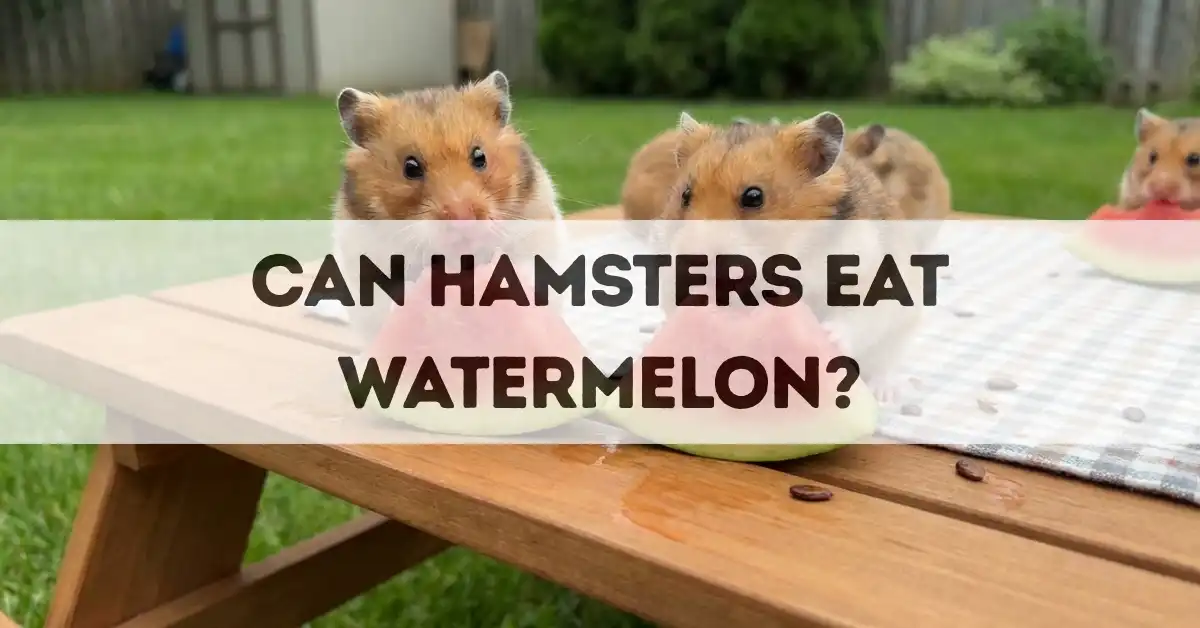
If you are asking can hamsters eat watermelon, the short answer is yes, but only in tiny amounts. Watermelon is not toxic to hamsters, and many hamsters will happily nibble a small piece of the soft flesh. But that does not mean it should become a regular part of their diet.
Watermelon is very watery and naturally sweet. For a tiny animal like a hamster, that matters a lot. Too much can lead to diarrhea, stomach upset, hidden spoiled food in the cage, and extra sugar that is not ideal, especially for dwarf hamsters.
So, is watermelon safe for hamsters? Yes, when it is prepared properly, served in a very small portion, and given only once in a while. The safest part is the fresh, seed-free flesh. The rind, seeds, juice, and dried watermelon are not good choices.
In this complete guide, you will learn exactly how to feed watermelon to a hamster safely, how much is too much, which hamsters should be more careful, and what to watch for after feeding it.
Can Hamsters Eat Watermelon? Quick Answer
Yes, hamsters can eat watermelon in very small amounts as an occasional treat. Only give the soft, fresh flesh, and remove all seeds first. Do not feed the rind, juice, or dried watermelon. Too much watermelon can cause diarrhea and may be risky for dwarf hamsters because of the natural sugar.
Is Watermelon Safe for Hamsters?
Watermelon is generally safe for most healthy adult hamsters when fed correctly. The inside flesh is soft and easy to chew, and it is not poisonous to them. That said, safe does not mean unlimited.
Hamsters are tiny pets with delicate digestive systems. A food that seems light and harmless to us can still be too much for them. Watermelon contains a lot of water and some natural sugar. In a tiny serving, this is usually fine. In a larger serving, it can quickly cause problems.
That is why watermelon should always be treated as a snack, not a normal food. Your hamster’s regular diet should still be built around a high-quality hamster food mix or pellets, with safe vegetables and occasional treats.
A good rule is simple: if you give watermelon, give less than you think you should.
Is Watermelon Healthy for Hamsters?
Watermelon can offer a few small benefits, but it is not an important health food for hamsters. It is more of a light treat than a nutrient-rich staple.
Here are the main possible benefits of watermelon for hamsters:
Mild hydration
Watermelon is mostly water, so a tiny piece can give your hamster a little extra moisture. This may seem refreshing in warm weather, but it should never replace access to fresh drinking water.
Small amounts of vitamins
Watermelon contains small amounts of vitamins such as vitamin A and vitamin C. These nutrients can support general health, but the amount in a hamster-sized serving is very small.
A bit of variety
Hamsters often enjoy small changes in their diet. A tiny piece of watermelon can add interest and enrichment.
Soft texture
Because watermelon flesh is soft, many hamsters find it easy to nibble.
These benefits are limited. Watermelon is not something your hamster needs. A hamster can stay perfectly healthy without ever eating watermelon. It is simply an optional treat if fed carefully.
Why Watermelon Can Also Be a Problem
The same things that make watermelon appealing can also make it risky.
It has a lot of water
Too much watery food can upset a hamster’s stomach. Loose stool and diarrhea are some of the biggest concerns with watermelon.
It contains natural sugar
Even natural sugar is still sugar. Hamsters are very small, so even a small sweet treat can be a lot for their body size if it is offered too often.
It spoils quickly
Hamsters like to store food. If your hamster hides watermelon in bedding or a sleeping area, it can turn messy and spoil fast.
This is why watermelon should be kept small, rare, and carefully monitored.
Nutritional Value of Watermelon for Hamsters
To understand whether watermelon is a good hamster treat, it helps to know what is inside it.
Watermelon is known for being:
- high in water
- low in calories
- naturally sweet
- fairly low in fiber compared with many vegetables
- a source of some vitamins and plant compounds
Let us look at the main parts more closely.
Water
Watermelon is made up of more than 90 percent water. This is why it feels juicy and refreshing. For a hamster, a little moisture is fine, but too much can lead to wet droppings and digestive upset.
Natural sugar
Watermelon tastes sweet because it contains natural sugar. It is not the highest-sugar fruit in the world, but it is sweet enough that portion size matters. For dwarf hamsters, which are more likely to have blood sugar problems, this is especially important.
Vitamins
Watermelon contains small amounts of vitamins like vitamin A and vitamin C. These can support overall health, but watermelon should never be relied on as a main nutrient source.
Plant compounds
Watermelon also contains compounds such as lycopene and beta-carotene. These are often discussed in human nutrition. For hamsters, they may offer a little value, but only in tiny amounts since hamsters should only eat very small fruit portions anyway.
Which Hamsters Can Eat Watermelon?
Not all hamsters are the same. Size and species matter.
Can Syrian Hamsters Eat Watermelon?
Yes, Syrian hamsters can usually eat a very small piece of watermelon flesh. Because they are larger than dwarf hamsters, they may handle a slightly bigger portion. Even so, the serving should still be tiny.
A Syrian hamster should never get a chunk that looks large compared to its body. A little cube or small sliver is enough.
Can Dwarf Hamsters Eat Watermelon?
Yes, dwarf hamsters can eat watermelon, but much more cautiously. This includes Campbell’s dwarf hamsters, Winter White dwarfs, Roborovskis, and many hybrids.
Dwarf hamsters are smaller and often more sensitive to sugary foods. They are also more prone to diabetes than Syrian hamsters. Because watermelon contains natural sugar, it should be fed very rarely, in a very tiny amount, or skipped entirely if your dwarf hamster has any health concerns.
If you have a dwarf hamster and are unsure, it is safer to be conservative.
Can Chinese Hamsters Eat Watermelon?
Chinese hamsters can have a tiny amount of watermelon flesh, but the same rules apply. They are small, so portion control matters a lot. Offer only a very small nibble and watch closely for digestive problems.
Can Baby Hamsters Eat Watermelon?
It is best to avoid feeding watermelon to baby hamsters.
Young hamsters have more sensitive digestive systems than adults. Watery and sugary foods can upset them much more easily. Baby hamsters should stay on a proper age-appropriate diet and should not be given risky treats too early.
If your hamster is still very young or not fully mature, wait. There is no benefit to rushing fruit treats.
Watermelon Safety by Hamster Type
Here is a simple way to look at it:
| Hamster Type | Can They Eat Watermelon? | Advice |
| Syrian hamster | Yes | Tiny amount only, once in a while |
| Dwarf hamster | Yes, with extra caution | Very small amount, due to sugar and diabetes risk |
| Chinese hamster | Yes | Tiny nibble only |
| Baby hamster | Best avoided | Too sensitive for watery sweet fruit |
How Much Watermelon Can a Hamster Eat?
This is the most important part of the whole topic.
A hamster should only eat a tiny piece of watermelon. Not a slice, not a cube the size of a grape, not a spoonful. Think of a portion that looks small even to you.
A safe amount is usually:
- Syrian hamster: one very small cube, about the size of a paw, or smaller
- Dwarf or Chinese hamster: a very tiny sliver or nibble, much smaller than a Syrian serving
If it is your hamster’s first time trying watermelon, offer less than that.
For a first taste, one tiny bite is enough. Then wait and observe for the next 24 hours before deciding whether your hamster tolerated it well.
How Often Can Hamsters Eat Watermelon?
Watermelon should only be an occasional treat.
A good limit is:
- once a week at most for a healthy Syrian hamster
- once every two weeks, or even less, for dwarf hamsters
- only rarely for Chinese hamsters
- not at all for babies
Some owners choose to avoid sugary fruits altogether for dwarf hamsters, and that is a reasonable choice.
Watermelon should never be fed daily. Even if your hamster seems to like it, daily feeding would bring too much water and too much sugar into the diet.
Can Hamsters Eat Watermelon Seeds?
No, watermelon seeds are best avoided.
Even though a hamster can chew many hard foods, watermelon seeds are still not a good choice. They can be awkward to chew, harder to digest, and may create a choking risk, especially for smaller hamster species.
Reasons to avoid watermelon seeds:
- they may be a choking hazard
- they are harder than the soft fruit
- they can upset digestion
- there is no benefit to giving them
If you offer watermelon, remove every visible seed before serving it.
Can Hamsters Eat Seedless Watermelon?
Yes, seedless watermelon is the better option for hamsters. It reduces the chance of choking and makes serving safer and easier.
Still, you should always check the fruit carefully. Seedless watermelon can still contain small white seed traces or soft immature seeds. Remove anything that looks like a seed before feeding.
Seedless watermelon is safer, but the same rules still apply. The portion must stay very small.
Can Hamsters Eat Watermelon Rind?
No, watermelon rind is not recommended for hamsters.
The rind is much tougher than the inside flesh. It is harder to chew, harder to digest, and more likely to cause stomach upset. It may also carry dirt, bacteria, or pesticide residue on the outer surface.
Even if the rind is not toxic, it is not a good hamster food.
Reasons to avoid watermelon rind:
- too tough for easy chewing
- harder to digest
- more likely to upset the stomach
- may contain residues from the outside of the fruit
Stick to the soft inner flesh only.
Can Hamsters Drink Watermelon Juice?
No, hamsters should not drink watermelon juice.
Juice is too concentrated and sugary for a hamster, even if it is homemade. It also does not offer the same safe chewing experience as a tiny fresh piece of fruit.
Hamsters should always drink plain, fresh water. Juice should never be used as a replacement.
Can Hamsters Eat Dried Watermelon?
Dried watermelon is not a good choice for hamsters.
When fruit is dried, the water is removed and the sugar becomes more concentrated. That means a small piece of dried watermelon can be much sweeter than a small piece of fresh watermelon.
Some dried fruit products also contain added sugar or preservatives, which makes them even less suitable.
If you want to offer watermelon, fresh plain flesh is the safest form.
Risks of Feeding Watermelon to Hamsters
Even though watermelon is not poisonous, there are still real risks if it is fed the wrong way.
1. Diarrhea and loose stool
This is one of the biggest concerns. Because watermelon contains so much water, eating too much can quickly cause soft droppings or diarrhea.
This matters because diarrhea can be dangerous for hamsters. They are so small that they can become weak or dehydrated faster than larger animals.
2. Too much sugar
Hamsters do not need much fruit, and sweet treats can add up quickly. Too much sugar may contribute to weight gain over time and can be especially risky for dwarf hamsters.
What seems like a tiny fruit snack to a person can be a big sugar hit for a pet that weighs only a small amount.
3. Diabetes risk in dwarf hamsters
Many dwarf hamsters are more likely to develop diabetes than Syrian hamsters. Sweet foods should be handled carefully with these species.
If your dwarf hamster is overweight, has a family history of diabetes, or has already shown signs of blood sugar problems, watermelon may not be worth the risk.
4. Digestive upset
Even if your hamster does not get full diarrhea, it may still have stomach discomfort, gas, or soft droppings if watermelon does not agree with it.
Every hamster is different. Some handle fresh fruit better than others.
5. Spoilage from hidden food
Hamsters often pouch food and store it in nests, tunnels, bedding, or corners of the cage. If your hamster hides watermelon instead of eating it right away, it can spoil fast.
Spoiled watermelon can leave wet sticky patches, bad smells, and a dirtier living space. It may also attract bacteria.
6. Choking risk
Large pieces and leftover seeds can create a choking hazard, especially for small hamsters. This is another reason to serve very small pieces and remove all seeds first.
What to Watch for After Feeding Watermelon
Any time you give your hamster a new food, keep an eye on it for the next day.
Look for:
- normal droppings
- normal energy
- normal appetite
- no bloating
- no signs of discomfort
- no hidden fruit spoiling in the cage
Signs that watermelon did not agree with your hamster include:
- diarrhea
- very soft stool
- reduced activity
- bloating
- loss of appetite
- obvious discomfort
- wet or spoiled food hidden in bedding
If you notice any of these, do not offer watermelon again. If symptoms are strong or continue, contact a veterinarian who sees small pets.
How to Safely Prepare Watermelon for a Hamster
Preparation matters. A safe serving should be fresh, plain, clean, and tiny.
Follow these steps:
1. Choose fresh watermelon
Pick watermelon that is ripe and fresh. Do not use fruit that is mushy, sour-smelling, fermented, or going bad.
2. Wash the outside
Even though you are not feeding the rind, washing the outside helps stop dirt or residue from getting onto the flesh while cutting.
3. Cut away the rind
Only the soft red or pink inner flesh should be used.
4. Remove all seeds
Take out every visible black or white seed trace.
5. Cut a tiny serving
Make a piece small enough for your hamster’s size. It should be much smaller than a human bite.
6. Serve it plain
Do not add anything. No sugar, no seasoning, no syrup.
7. Remove leftovers
If your hamster does not eat the watermelon right away, take it out before it spoils. Also check the cage later in case your hamster stored it somewhere.
Best Way to Introduce Watermelon for the First Time
When trying watermelon for the first time, start with the smallest possible amount.
A good first test is one tiny bite.
After that:
- wait 24 hours
- watch droppings and behavior
- check for hidden leftovers
- only offer it again later if everything stays normal
This slow approach is much safer than giving a full treat portion right away.
Common Myths About Hamsters and Watermelon
There are a few common misunderstandings that can lead to feeding mistakes.
Myth 1: If a hamster likes watermelon, it must be good for them
Not always. Hamsters may enjoy sweet foods even when those foods should only be eaten rarely. Enjoyment does not always mean safety in larger amounts.
Myth 2: Watermelon can help replace a water bottle
No. Watermelon contains moisture, but it is not a substitute for fresh water. Your hamster must always have access to clean drinking water.
Myth 3: Seedless watermelon does not need checking
Wrong. Seedless watermelon can still have small seed traces. Always inspect the fruit before serving it.
Myth 4: Natural fruit cannot be harmful
Natural foods can still cause problems if they are too sugary, too watery, or fed too often. Hamsters need careful portion control.
Common Mistakes Owners Make
Well-meaning hamster owners often make the same simple mistakes with watermelon.
Giving too much
A piece that looks tiny to you may be huge for a hamster.
Feeding it too often
Even a safe treat becomes unhealthy if it is offered too regularly.
Forgetting to remove seeds
Seeds are not worth the risk.
Offering the rind
The rind is not the safe part to feed.
Leaving leftovers in the cage
Fruit spoils quickly, especially if hidden.
Feeding sugary fruit to a hamster with health issues
Hamsters that are diabetic, overweight, elderly, or recovering from illness need extra caution.
What If a Hamster Eats Too Much Watermelon?
If your hamster accidentally gets more watermelon than it should, do not panic, but do act quickly and carefully.
Here is what to do:
- remove any remaining watermelon
- make sure clean water is available
- watch for diarrhea or reduced activity
- check for hidden fruit in the cage
- keep an eye on appetite and droppings
If your hamster develops severe diarrhea, acts weak, or seems unwell, contact a vet as soon as possible. Because hamsters are so small, problems can become serious faster than many owners expect.
Should Sick, Elderly, Overweight, or Diabetic Hamsters Eat Watermelon?
In many cases, it is better to avoid watermelon for hamsters with health issues.
Be extra careful if your hamster is:
- diabetic
- overweight
- elderly
- recovering from illness
- prone to digestive upset
- eating poorly already
These hamsters may be less able to handle sweet or watery treats. If your hamster falls into one of these groups, talk to a small-animal vet before offering watermelon.
When Should You Avoid Watermelon Completely?
There are times when skipping watermelon is the safest choice.
Do not feed watermelon if your hamster:
- is a baby
- currently has diarrhea
- has a sensitive stomach
- is diabetic or may be diabetic
- is overweight
- reacted badly to fruit before
- is recovering from sickness
- is a dwarf hamster with known sugar sensitivity
In these situations, avoiding watermelon is often the wiser decision.
Is Organic Watermelon Better for Hamsters?
Organic watermelon may reduce concerns about pesticide exposure, but it is not automatically safer if the serving is too large. The most important things are still:
- wash the fruit
- remove the rind
- remove the seeds
- serve only the flesh
- keep the portion tiny
Whether the watermelon is organic or not, portion size matters most.
Is Watermelon Better Than Other Fruits for Hamsters?
Watermelon is not usually considered one of the best fruits for hamsters. It is safe in a small amount, but it is very watery and not very filling. Because of this, it can cause loose stool more easily than some other treats.
That does not make it forbidden. It simply means it should be seen as a light occasional snack rather than an especially useful fruit.
If your hamster does not like watermelon, or if you are worried about sugar or digestion, there is no reason to push it. Your hamster does not need it.
If Watermelon Is Not a Good Choice
For some hamsters, watermelon may not be worth the risk. This is especially true for baby hamsters, diabetic hamsters, overweight hamsters, and many dwarf hamsters.
If that sounds like your pet, it is perfectly fine to skip watermelon. There is no health need for it. Choosing not to feed it is often the safest option.
Practical Feeding Examples
Sometimes it helps to picture exactly what a safe serving looks like.
For a Syrian hamster
- choose a fresh piece of seedless watermelon
- remove any seed traces
- cut a cube no bigger than the hamster’s paw, or smaller
- offer it once
- remove leftovers soon after
- do not feed again for at least a week
For a dwarf hamster
- cut a very small sliver
- offer only a tiny nibble
- watch closely for soft droppings
- feed very rarely, or skip if you are concerned about sugar
For a Chinese hamster
- give only a tiny bite
- monitor closely afterward
- keep treats rare
These examples show just how small the serving should be.
Quick Safety Checklist
Before feeding watermelon, ask yourself:
- is my hamster healthy and old enough?
- am I only using the soft inner flesh?
- did I remove all seeds?
- is the portion truly tiny?
- will I check for leftovers later?
- has my hamster handled fruit well before?
If the answer to any of these is no, wait and reconsider.
When to Ask a Vet
It is a good idea to ask a vet before feeding watermelon if your hamster:
- has diabetes
- is overweight
- has digestive issues
- is elderly
- is recovering from illness
- has reacted badly to fresh foods before
A veterinarian who treats small pets can give more specific advice based on your hamster’s health.
Can Hamsters Eat Watermelon?
Yes, hamsters can eat watermelon, but only in very small amounts and only as an occasional treat. The safest part is the fresh, soft, seed-free flesh. You should not feed watermelon seeds, rind, juice, or dried watermelon.
Watermelon is not toxic, but it is very watery and naturally sweet. If you feed too much, it can cause diarrhea, stomach upset, and problems for hamsters that are sensitive to sugar, especially dwarf hamsters.
If you decide to offer watermelon, keep the portion tiny, introduce it slowly, and watch your hamster afterward. A little can be a fun treat. Too much can quickly become a problem.
Frequently asked questions
Here is the simple version:
- Can hamsters eat watermelon? Yes, in tiny amounts.
- Is watermelon safe for hamsters? Yes, if fed rarely and prepared properly.
- Which part is safe? Only the soft fresh flesh.
- Can hamsters eat watermelon seeds? No, best avoided.
- Can hamsters eat watermelon rind? No, not recommended.
- Can dwarf hamsters eat watermelon? Very cautiously, because of sugar and diabetes risk.
- Can baby hamsters eat watermelon? No, it is best avoided.
- How much should a hamster eat? A tiny piece only.
- How often can hamsters eat watermelon? Once a week at most for Syrians, less often for dwarf hamsters.
- Main risks? Diarrhea, excess sugar, and hidden spoiled fruit in the cage.
Watermelon can be a safe hamster treat when handled with care. In hamster feeding, smaller is almost always better.